

Imagine your sales crew stuck handling five different spreadsheets, scattered emails piling up, one person scribbling notes by hand – just trying to track who might buy and who vanished weeks back. One missed message slips through. A customer walks away. The boss steps in asking why, yet no clear answer shows up. Ring any bells? That chaos right there is precisely what Microsoft Dynamics 365 Sales aims to untangle.
Picture a digital workspace where keeping up with clients feels less like chasing paper. That is Microsoft Dynamics 365 Sales – software stored online that organizes customer details, guides potential buyers through steps, then seals agreements smoothly. By 2026, many expanding departments rely on it heavily. Knowing its role matters if exploring business ideas, stepping into selling roles, or simply decoding today’s corporate rhythm. Here unfolds each key piece about this tool: its purpose, real-world function, daily team habits tied to it.
What Exactly Is Microsoft Dynamics 365 Sales?
Picture a notebook that never forgets. It holds names, yes, yet tracks each message, call, even silences between talks. This thing knows who said what, when they said it, then whispers – right on time – about who needs a reply next Tuesday. Some tools just store data. This one thinks ahead, spots patterns others miss. Imagine knowing which handshake will turn into a contract before coffee goes cold. That kind of quiet confidence comes from something deeper than software – it learns.
Out in the open web, it stays clear of clunky downloads. Access happens on any device, so long as there’s connection – office desk, kitchen table, even a corner booth downtown. Customer details live together with follow-ups, messages, voice summaries, and where each opportunity stands – all tucked into a single hub. Wherever work lands, the data moves right along.
Something sets it apart from simple address books – smarts woven deep inside. This system leans on artificial intelligence so sellers see who deserves a call right now, spots when opportunities start fading, even guesses if numbers add up to hitting next month’s goal. Flaws exist, sure, every program has them, still it slashes through uncertainty that drags too many groups backward.
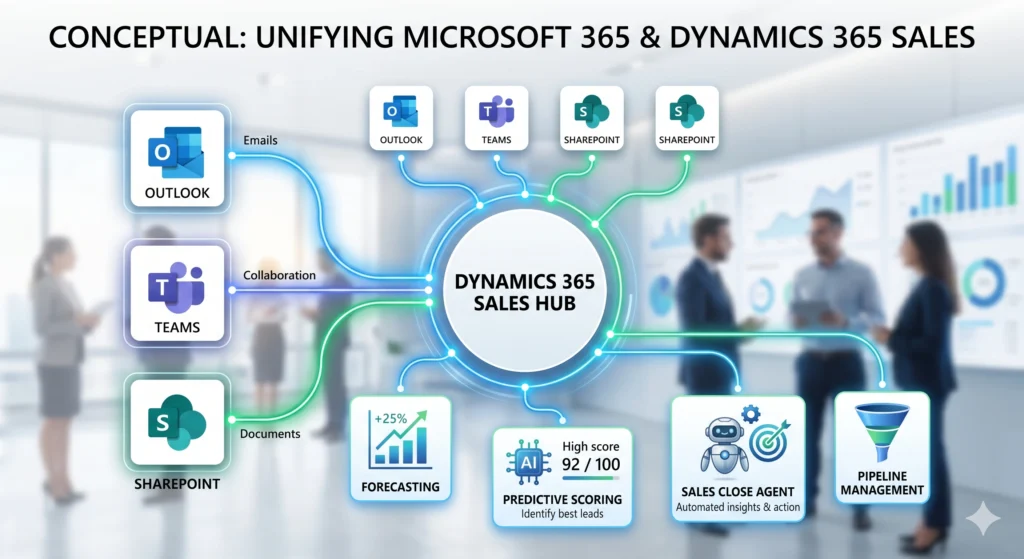
Most workplaces already run on software such as Outlook, Teams, and SharePoint – Microsoft made sure its system fits right into that world. Because of this fit, anyone familiar with these apps picks up the new tool faster than they might think.
How the Lead-to-Deal Process Actually Works
Truth is, plenty of learners wonder how selling actually works. The reality? It’s messier than most charts make it seem. Still, Dynamics 365 Sales helps groups stay on track with a straightforward approach.
What Is a Lead, and How Does It Become a Deal?
A person might glance at your product, take a peek without promising anything. Perhaps they typed details into a web field, or passed a card across a table during an event. Right then, the tool grabs those bits before they slip away.
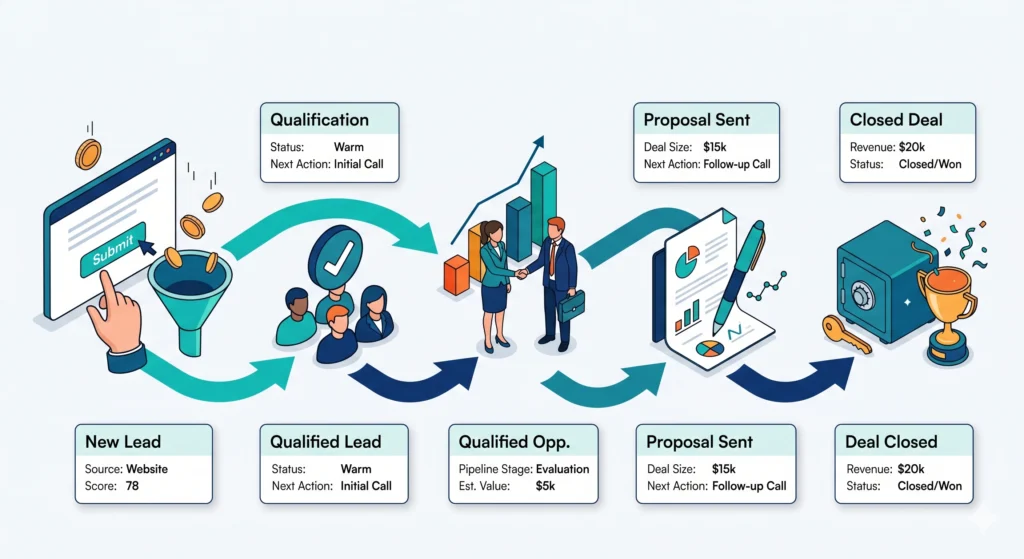
Inside Dynamics 365 Sales, a lead gets handed off to a salesperson who begins following up right away. Calls go on record, messages shoot out from within the tool, alerts pop up when follow-ups are due. If signs point to real interest, the seller marks it as qualified – meaning they see potential worth chasing. Then, like turning a page, the software shifts the lead into an opportunity. From there, progress unfolds across steps: checking fit, building value, offering solutions, wrapping things up.
Picture yourself as Priya, working sales at a software firm that’s neither too big nor too small. When a manufacturer reaches out curious about costs, she records the details right away. With money set aside and a clear schedule in place, she marks it as a live chance to close. Now the platform reveals precisely where things stand and hints at what follows. Her mind stays free since the tool tracks everything behind the scenes.

Business Process Flows: The System That Keeps Everyone on the Same Page
Most newcomers find Dynamics 365 Sales confusing when they first meet business process flows. These work kind of like step-by-step guides tailored to every phase of a sale. When someone reaches the “develop” point, the software reminds them to log details such as the buyer’s budget and who holds authority to decide. Moving into the “propose” part, entering a quote ID becomes necessary. Because of this setup, consistency emerges across the group – no more random methods popping up everywhere.
Is it a bit rigid sometimes? Yes. Experienced reps occasionally find the required fields annoying. But for teams where some people are new, having that structure prevents the classic problem of someone closing a deal without any documented steps, leaving the manager completely in the dark about how it happened.
The AI Features That Are Actually Useful in 2026
AI gets overhyped constantly. But inside Microsoft Dynamics 365 Sales, there are a few AI features that teams are genuinely using in 2026.
Predictive Lead Scoring
The system looks at historical data from past deals and scores each lead on a scale, predicting how likely that lead is to convert into a sale. A score of 80 means the system thinks there’s a strong chance this person will buy. A score of 20 means the opposite.
Some folks on sales teams won’t treat those numbers as absolute truth. Still, they give a way to sort out which tasks come first each morning. Rather than dialing through fifty names without pattern, someone may pick the top ten based on score before moving to lower-ranked contacts. As weeks pass, and outcomes line up with predictions, confidence in the system slowly builds.
Copilot for Sales: What It Does
Inside Dynamics 365 Sales, Microsoft slipped in an AI helper named Copilot – by 2026, it actually helps. Before meetings, instead of scanning old notes, reps get short summaries of long customer histories. Meeting wrap-ups pulled straight from Teams chats land neatly in records without anyone lifting a finger. Once a conversation ends, an email draft builds itself using what got talked about.
Here’s a real friction point though: the summaries are only as good as the data in the system. If a rep hasn’t been logging their calls properly, Copilot’s summary of that account is going to be thin and not that helpful. The AI makes a disciplined team faster. It can’t fix a disorganized one.
The Sales Close Agent
This is one of the newer additions. The Sales Close Agent is an autonomous AI agent that monitors your open deals, flags ones that look at risk, and proactively alerts the sales rep when something needs attention. If a deal has had no activity for 14 days and the expected close date is approaching, the agent surfaces that in the rep’s dashboard with a suggested action.
Some reps find this incredibly useful. Others find it creates noise if their pipeline is large and many deals naturally have slow periods. The key is configuring it correctly for your team’s sales cycle length.
Sales Forecasting: Helping Teams Stop Guessing
Fair warning – predicting numbers isn’t clean work. Most folks running sales teams are really asking one thing: what will we actually earn by quarter’s end? For many groups, that number comes from instinct, shaky calculations on a grid of cells, then crossing fingers no one inflated their promises too high.
Picture this: numbers come alive when Dynamics 365 Sales taps into live opportunity details stored inside. A chance to seal each deal shows up as a percent right next to it. That figure gets multiplied – deal size times likelihood – like weighing odds in real time. All those calculated pieces then roll up quietly into one clear forecast total.
You can set forecasts by individual rep, by region, by product line, or by the whole organization. Managers can drill down into each rep’s numbers and see exactly which deals are contributing to the forecast. When a deal moves stages, the forecast updates automatically.
The more powerful version, available in the Premium tier, uses machine learning to generate its own predicted revenue number based on historical patterns rather than just the rep’s manually entered probability. This is useful because reps often enter optimistic probabilities. The AI looks at similar deals from the past and gives a more realistic projection.
A sales manager named Arjun told me once that the biggest shift for his team wasn’t the fancy AI forecasting. It was simply having everyone’s data in one place so he could have an honest conversation about pipeline in their weekly meeting instead of chasing people for updates. That’s still what most teams use this for.
Integration with Microsoft 365: Why This Matters
Most teams pick up on Microsoft Dynamics 365 Sales fast – mainly since it slips right into familiar Microsoft tools. That fit matters more than it sounds; otherwise, people tend to log in once then leave it sitting unused.
Outlook Integration
Getting an email from a lead means the salesperson views that contact’s entire history in the CRM – right within Outlook. No need to open another window or app. Right there, they can save the message, set up a next step, even adjust where the deal stands. Most CRMs struggle since team members skip logging info. But when recording details happens exactly where work already takes place, people tend to do it more often.
Teams Integration
Right after a chat on Microsoft Teams, team members jot down thoughts and what comes next without leaving the screen. A quick summary appears by itself, thanks to Copilot, then slips into the right CRM file. Virtual meetups happen often for sellers – this shaves off hours otherwise spent on follow-up tasks every single week.
SharePoint for Proposals and Documents
Once a sale wraps up, every detail stays within reach. Stored in SharePoint, quotes hook right into their matching deals inside Dynamics 365 Sales. Proposals sit close by, tied neatly to each record. Contracts appear just where they’re needed – no hunting down old emails required. Everything lives together, simple to locate.
The Pricing Tiers: What You Actually Get at Each Level
Figuring out the cost makes sense since what you get shifts a lot across levels.
Starting at roughly sixty five dollars each month per person, the Sales Professional package gives you essential tools for managing sales tasks. Lead tracking, deal oversight, customer details, simple reports, phone support, along with linking up to Microsoft 365 come included. Small groups moving away from manual sheets and common email boxes usually find this level fits well.
Eventually, teams building unique sales workflows land on the Sales Enterprise plan. Customization kicks in deeper, automation handles routines while forecasts gain sharper edges. Complex reporting needs show up often. So do connections to separate business platforms. This is where those paths usually lead.
Here’s what sits at the top: Sales Premium. It holds every tool found in Enterprise, yet adds AI-driven tools like conversation insight, a sales booster, forecast scoring, along with stronger Copilot functions. Cost climbs, true – though by late 2025, Microsoft began including 1,000 Copilot Credits monthly for each user on Premium, letting teams try AI tools directly, no extra charge needed.
For teams focused on B2B outreach using LinkedIn, pairing Sales Enterprise with LinkedIn Sales Navigator fits naturally. This combo shows up as the Relationship Sales choice, built for heavy prospecting workflows.
Who Is Microsoft Dynamics 365 Sales Actually Built For?
Answering this plainly matters since the tool fits some but not all.
One thing – mid-sized or larger firms juggle more moving parts. Think separate sales crews, tangled deal timelines, various offerings or areas to track. Picture twenty sellers working distinct zones. Their deals? Often wrap up only after about ninety days. What helps most is pulling every bit of activity into one place. Then shaping how each person follows through. Not chaos. Structure.
Small teams might find it awkward to use. Getting everything ready can take weeks. Shaping it around how you sell means knowing code or hiring help. Costs climb fast when billed per person each month, especially with just a couple users.
Should you aim for work in business, selling stuff, or helping firms manage customer relationships, getting familiar with this tool actually helps. Firms often pick people who’ve used Dynamics 365 before – luckily, Microsoft lets anyone test it free for a month. That way, exploring its features costs nothing at all.
Common Questions People Have About Microsoft Dynamics 365 Sales
Can it replace Salesforce?
True, some businesses find it helpful. While Salesforce offers more apps and a longer track record, Dynamics 365 Sales stands out when a company already uses Microsoft tools heavily – syncing with Outlook, Teams, and Azure just works better, needing fewer fixes over time. Cost differences come down to your team size and which functions matter most.
Is it hard to learn?
Most people find the core tools for tracking leads and deals straightforward, particularly when they have CRM experience. Though it feels familiar at first, creating tailored processes can stretch out over weeks. Setting up prediction models or arranging smart automation isn’t something beginners handle quickly. A typical salesperson becomes comfortable after several days of practice. But aligning the whole setup with one company’s unique needs? That usually means bringing in experts.
What happens if the internet goes down?
A few features work on phones even when there’s no internet, letting field staff record simple tasks. When the system lives online, though, extended downtime causes problems. Spotty service zones make this an actual issue for crews out in remote locations.
A Powerful CRM for Growing Teams: What That Actually Means in Practice
Here’s what hides behind that common line about strong tools for expanding groups. Not magic just practical design inside Microsoft’s sales system.
One sign of a scaling team? Hiring more sellers, moving into fresh markets, or handling tougher sales than before. When teams grow, hiccups show up – processes get messy because everyone works their own way. Some opportunities vanish without anyone noticing. Supervisors find themselves stuck chasing down updates instead of guiding people. Predicting what comes next feels like guessing, since there’s no solid method to know where results will land.
Microsoft Dynamics 365 Sales addresses these by giving everyone a shared process, a shared view of the pipeline, and tools that reduce the administrative overhead of tracking deals. It doesn’t automatically make a sales team better at selling. What it does is remove the structural problems that prevent a capable team from operating cleanly.
A team of five people can get away with a shared spreadsheet. A team of fifteen operating across three regions probably can’t. The moment you can’t see what your whole team is doing at a glance, you’ve grown past what informal systems can handle. That’s when a tool like this earns its cost.
Conclusion: Microsoft Dynamics 365 Sales in 2026 and Why It Matters
Even in 2026, few CRM systems match what Microsoft Dynamics 365 Sales offers sales groups tackling tough workflows. Sure, price isn’t its strong suit – neither is quick installation – but when operations involve many sellers, diverse products, and solid predictions, only then does it truly shine. Spreadsheets fall short here; so do rudimentary address books. Because behind messy pipelines, clarity often hides in smart structure.
What’s changed most in recent years is the AI layer. The Copilot features, the Sales Close Agent, and the predictive scoring have moved from novelty into genuinely useful territory, as long as the underlying data in the system is clean. Garbage in, garbage out still applies.
If you’re studying for a business degree, getting into sales operations, or evaluating CRM tools for a company, this platform is worth understanding in depth. The free trial is there. The documentation on Microsoft Learn is detailed and free. And the job market consistently values people who know how this system works from the inside.
The technology won’t make a bad salesperson good. But it can absolutely make a good team more organized, more focused, and better positioned to close the deals that are actually winnable. That’s not a small thing.