Out of nowhere, someone in a London tech firm wastes an entire morning pulling together two hundred names. Numbers get punched into a phone for forty-eight straight hours. Some digits? Just dead air. Others reach voices that left their jobs weeks ago. Only after reaching the right person did they realize how much of the week had slipped away with little progress. It wasn’t their method holding them back – the issue sat in the numbers all along.
Here’s the main issue Cognism aims to fix. What follows is a clear look at the system in 2026 – its real function, the people it truly supports, cost structure, and spots where some groups might struggle. Anyone weighing whether a top-tier B2B lead tool justifies the expense, particularly if clean data and staying within legal lines are key, will see how things stand without spin or gaps.
What Is Cognism and How Did It Get Here?
Starting in 2015 from a small office in London, Cognism set out to fix messy contact details for sellers focused on Europe. Instead of offering broad solutions, it zeroed in on one clear gap – unreliable prospect data. Sales and marketing groups began using the platform when they needed trustworthy ways to connect with decision makers. Over time, accuracy became its standout trait, especially where others fell short. Though many tools claim similar results, few stick strictly to refining how teams locate working emails and phone numbers. Its growth came quietly, driven more by daily usefulness than bold announcements. Today, reaching the right person at a company still remains harder than it looks – this is where such platforms prove their worth.
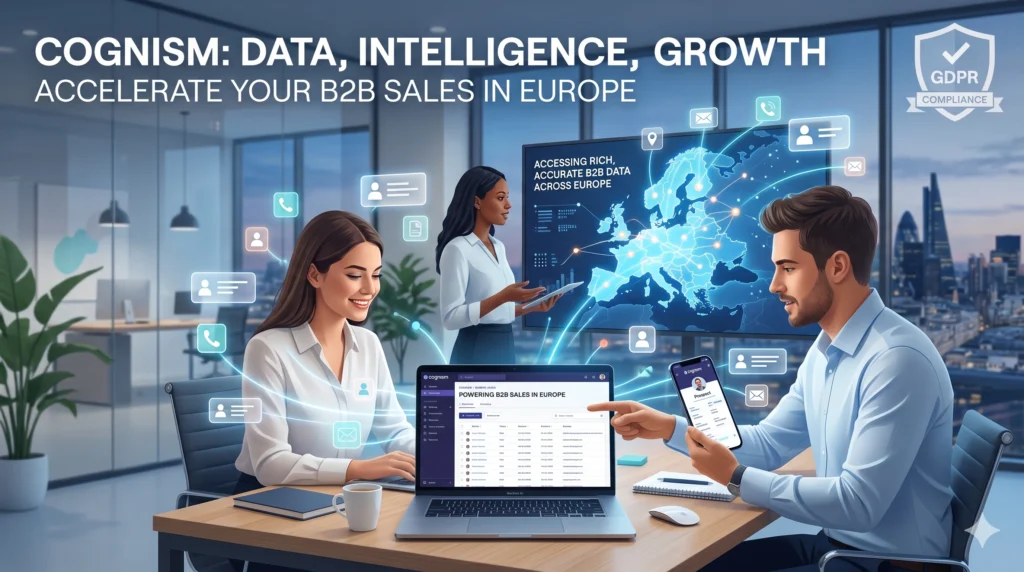
Here is how it works. A business looking to sell to another one must figure out the right individual inside that organization. That means finding more than just the company’s name – it has to be someone with authority to approve purchases. Reaching them requires an active email or direct phone line. Without those, communication stalls before it begins. Most folks lose track of updates before you even start looking. Job shifts happen fast, org charts flip without warning, while directories gather dust almost right away.
Cognism’s answer to that was to build what they call Diamond Data, their phone-verified mobile number database. Instead of just collecting numbers from various sources and hoping they’re accurate, Cognism actually employs people to call each mobile number and confirm it before it goes into the verified pool. That verification step is what makes their data stand out in a market where most providers are working with data that’s weeks or months old.
The company now serves enterprise and mid-market sales teams with a database of over 400 million contacts globally, though the quality is noticeably stronger in the UK and wider European markets than anywhere else.
Cognism Review 2026: The Core Features That Matter
Diamond Data and Phone Verification
This is the feature that defines Cognism’s reputation. When people talk about Cognism being worth the money, they’re mostly talking about Diamond Data.
Here’s how it works. Most B2B data providers compile contact information from web scraping, public records, and data partnerships. The result is a database that’s large but unreliable. You might have a phone number for someone, but by the time you dial it, they may have left the company six months ago or the number may never have been accurate in the first place.
Cognism takes the contacts in their Diamond Data set and physically verifies each mobile number before labeling it verified. A real person calls the number and confirms it’s active and connected to the right individual. The result is a smaller dataset than competitors but one where users consistently report connection rates two to three times higher than industry-average tools.
For a sales team doing cold calling outreach, that difference is enormous. If your SDRs (sales development reps, the people doing first-contact prospecting) are spending half their time dialing bad numbers, fixing the data quality problem frees up real time for actual conversations. One company quoted in Cognism’s own case studies reported their outbound team hitting 4x their revenue run rate within six months of switching to verified data. Those results aren’t typical for everyone, but the directional benefit of more accurate contact data is real.
GDPR and Compliance Coverage
For many European sales groups, choosing Cognism feels nearly automatic – yet squads elsewhere rarely grasp why.
Out here, where data moves fast, Europe drew a line. That rulebook called GDPR? It decides what firms may do with someone’s details – names, emails, anything private. Slip up, and the cost bites hard. Think penalties climbing into massive numbers, not just pocket change. Watch sectors like banks, clinics, hospitals, or lawyers extra close; their watchmen never blink.
Using contact details from a source that does not follow rules puts sales teams in legal danger. A complaint about how someone’s information was collected might trigger an official inquiry into the business. Because Cognism checks every record it holds against banned calling lists in over fifteen nations across Europe, exposure drops sharply. Compliance with California’s strict privacy law is built into the system, not added later. Proof of where data comes from stays attached, just in case questions arise down the line. Keeping clear logs lets firms show they acted responsibly, should doubts appear.
For teams selling into the UK, Germany, France, or anywhere in the EU, this compliance infrastructure isn’t optional. It’s what makes Cognism worth considering at its price point compared to cheaper alternatives that leave compliance as the customer’s problem to figure out.
The Chrome Extension
Most people talking about Cognism point to the Chrome add-on as something they actually use every day. When checking someone’s LinkedIn page, it grabs confirmed contact info straight from Cognism – no switching pages needed.
Picture this: you’re talking to someone on LinkedIn who fits what you’re looking for. Rather than jumping between tabs, pasting names, hunting through search fields, the tool shows real-time contact details right where they are – on that profile. With just one tap, everything moves into your system without extra steps.
The whole thing is genuinely faster than the alternative. Users who’ve switched from other data tools often mention saving 30 minutes to an hour daily just from this workflow improvement alone.

Intent Data and the Bombora Partnership
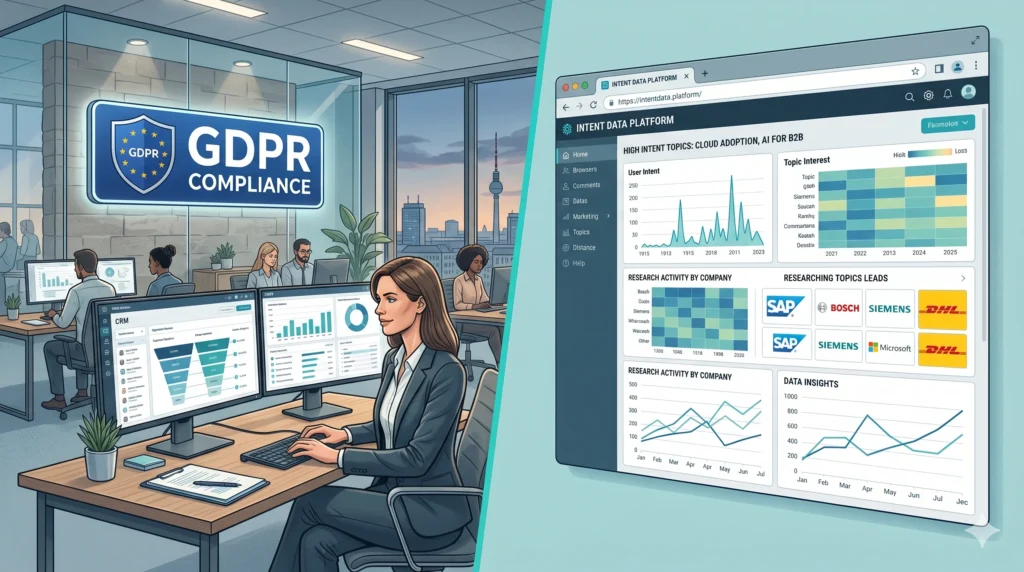
Now here’s a twist – Cognism tosses in intent data on its costlier tiers. This bit reveals which businesses are digging into certain topics at this very moment. Mostly, that insight rolls in from Bombora. Few names carry more weight in this space than theirs. Tracking happens across many publisher sites, logging who reads what. If content ties to your market, it shows exactly which firms are paying attention lately.
This is useful because it changes the timing of outreach. If you know a company is actively researching project management software right now, reaching out at that moment is meaningfully different from cold-calling the same company on a random Tuesday when they’re not thinking about it at all.
The limitation is that Cognism’s intent data only covers external signals. It can’t tell you which specific person at a company is doing the research, and it can’t track what’s happening on your own website. First-party intent (behavior on your own site) requires a separate tool. That’s a gap worth understanding before you assume intent data means you’ll know everything about buyer behavior.
CRM Enrichment
Missing details? Cognism steps in silently, refreshing stale entries in your customer database. When someone shifts roles after your last note, the system adjusts the profile without asking. Got just an email? It layers on a phone number, maybe a current title – quietly filling gaps. Information flows back into empty fields like water finding its level.
Every time someone new shows up in your CRM, their details fill in right away. Picture updates happening overnight, like clockwork, keeping everything fresh without lifting a finger. Or maybe you toss in a spreadsheet when it suits you, hands free till then. Think of the hours saved, especially if you are herding dozens of salespeople who once chased old leads blindly.
Cognism Review 2026: Pricing and What to Expect
Pricing details for Cognism stay hidden unless you request them. A demo comes first – much like with Outreach or Salesloft – then a chat with sales. Only after that do they reveal costs. This setup trips up people looking to compare options fast. Surprise waits at each step, making users restless. Reviews keep pointing at this pattern, again and again.
By 2026, figures pulled from open bidding records and feedback shared by users show a clear pattern. Public purchasing logs combined with real usage experiences shape this view. What emerges comes straight from documented orders plus firsthand accounts. Data points accumulate through vendor updates along with field observations. Patterns form when contract awards meet actual deployment stories. Year-on-year shifts appear within tender results together with service notes. Information builds up via supply chain filings paired with customer input.
One step up sits Cognism’s Grow option – once named Platinum – costing close to $1,500 yearly per person, along with a starting platform charge near $15,000 annually. Mobile-ready contact details, signals showing buyer interest, and smart automation tools come bundled into the pricier tier, now labeled Elevate but formerly known as Diamond. Priced higher, it demands about $2,500 each year per individual seat, topped by a baseline system access cost set at $25,000 every twelve months.
For five people using the Elevate plan, the price comes out close to $37,500 yearly, once talks are done. Not pocket change, especially since it gives numbers alone – no real outreach tools inside.
Big company squads might pay between fifty grand and a hundred grand yearly, shaped by how many users plus deal specifics. Custom pricing spells that out.
One thing missing? A chance to try it without paying first. Instead of a free version, they set up a custom walkthrough with someone from their team – hands-off for you until you sign something. You do not touch real information ahead of time. Some people who’ve tried it point out this feels limiting. Other tools, such as Apollo, give access upfront so you check accuracy on your own terms before any payment happens.
Most people sign up for a full year. Payment every month? That rarely happens. When deals renew automatically, staying on top of exit dates becomes necessary. Change comes around – be ready.
One thing Cognism does better than most tools at this price: unlimited data exports. Many competitors use a credit-based system where each contact lookup or export costs credits that run out and need to be repurchased. Cognism doesn’t operate that way, which is a genuine advantage for teams running high-volume prospecting.
Where Cognism Genuinely Performs Well
When it comes to Europe, this platform stands out more than others. Selling across the UK, Germany, France, Benelux, or broader EMEA? Team feedback shows Cognism beats rivals – especially on correct mobile numbers and staying within rules. Cold calling central to your approach? Focus on European prospects? Verified details here shift the balance: longer stretches of useful conversations, fewer wasted attempts.
Most people find the system straightforward after a short while. Getting used to it takes effort at first, yet many say they handle key tasks like searching and exporting in ten to fourteen days. Layout stays clean without too much on screen. Filters for creating outreach lists work well, though some adjust settings more than others.
Praise for customer help shows up more often than you’d expect at this price. Right after signing up, people tend to mention how quickly someone replies – plus the advice actually makes sense. Not every story is glowing, sure. Still, when stacked against what others say about Outreach or Salesloft, the difference leans clearly one way.
Hidden inside the system, compliance isn’t something added later. When you’re handling rules from several European regions – or working in tightly controlled fields – this detail outweighs how much less some options cost
Where Cognism Falls Short
The data quality outside Europe is the most honest criticism of the platform. Users targeting North American prospects, particularly mid-market companies in the US, report that coverage and accuracy don’t match what they get for European contacts. Independent data quality tests have suggested that a meaningful percentage of non-European numbers are incomplete or inaccurate. If your ideal customer profile (the kind of company you’re trying to sell to) is primarily US-based, Cognism isn’t the strongest option. Apollo, ZoomInfo, or SalesIntel have better North American database coverage.
The tool doesn’t do outreach. Cognism gives you the data. What you do with it is entirely up to you and whatever other tools you’re running. There’s no built-in email sequencer, no dialer integration, no pipeline tracking. That means every company using Cognism needs at least one other platform to actually send emails or make calls, which adds to the total technology cost. For teams already running Salesloft or Outreach, Cognism plugs in cleanly. For teams starting from scratch, the tool-stacking cost adds up.
Intent signals are useful but limited to Bombora topic data. Some users describe the signals as broad enough that they require interpretation rather than being immediately actionable. Knowing a company is “researching cybersecurity solutions” is helpful, but it doesn’t tell you which specific person within that company is doing the research or where they are in their decision process.
No free trial creates a real commitment problem for smaller teams who want to validate data quality before signing a year-long contract worth tens of thousands of dollars. The demo shows you the interface, but you can’t truly test whether the phone numbers actually work for your specific target market until you’ve already paid.
A Realistic Look at Who Should Use Cognism
Let me be direct, because it saves everyone time.
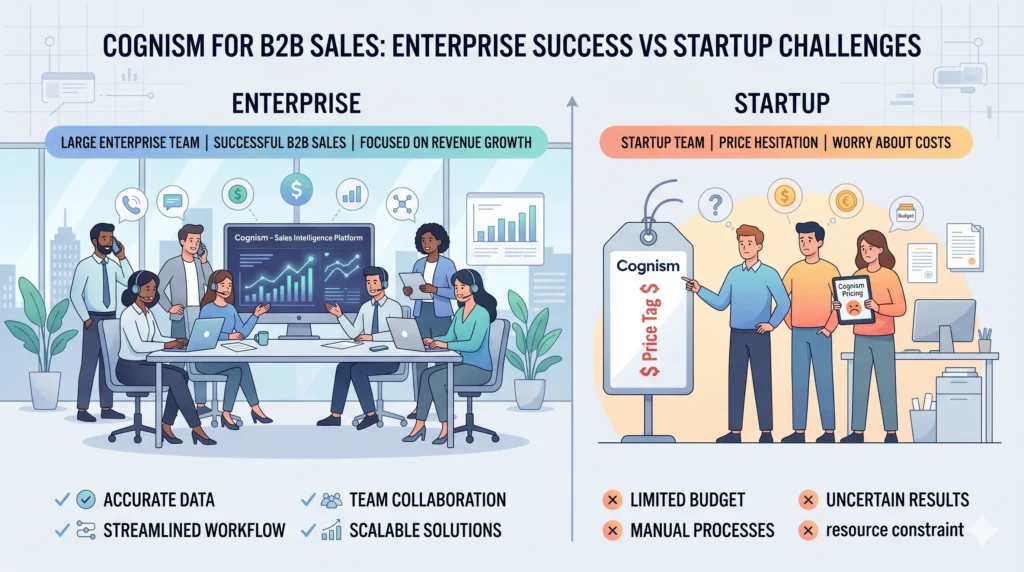
Cognism is a strong fit for mid-market and enterprise B2B sales teams that are primarily selling into the UK and European markets, rely heavily on cold calling as an outreach channel, are in industries where GDPR compliance is a real concern, have budget for a $15,000-plus annual platform fee, and already have a separate outreach tool like Salesloft or Outreach in their stack.
A friend who works at a London-based cybersecurity firm started using Cognism about eighteen months ago. She said the first two weeks were a bit disorienting because there was more to configure than she expected, but once their Salesforce integration was set up and the team learned the filtering options, they stopped spending time on bad numbers. Her team’s call connection rate went up noticeably within the first month. The thing she’s less enthusiastic about is the contract renewal process, which she described as less transparent than she’d hoped.
For startups with small teams, companies with tight budgets, businesses focused on email rather than cold calling, or teams selling primarily into North America, the cost-to-value equation is harder to justify. There are cheaper tools that work reasonably well for those situations.
Cognism Review 2026: The Summary
Truth be told, Cognism stands out when it comes to cold calling in Europe – especially where rules matter. Verified numbers mean fewer dead-end calls. Built-in GDPR safeguards aren’t just window dressing; they work quietly but well. Using the system feels smooth, even if no specialist handles it full time.
Out here beyond Europe, data gets shaky fast. Without tools to reach out baked in, another service tag comes along every time. Priced like that, it leans toward big players – small groups might just walk away. Trying it first? Nope, jump straight into paying if you want a look.
When looking at Cognism for your group, try this clear method. Before setting up a call, outline where you aim to reach, how you plan to connect, also how many people are on your team. Share early what goal you have in mind instead of waiting – then question if their reach holds up in those exact regions and sectors you need. Request real examples of data tied to your market prior to any commitment. Start by looking at the full yearly price, factoring in the platform charge, then stack it beside quotes from tools such as Apollo or Lusha for a team of identical scale. Only after seeing those numbers side by side can you judge if paying extra for confirmed EU contacts fits your needs.