
Everyone Is Saying SaaS Is Dead. But Are They Right?
Open any tech newsletter right now and you will almost certainly see this headline – “SaaS Is Dead.”
Investors are nervous. Founders are worried. And if you follow the stock market, the numbers look scary. Public software stocks dropped around 20% through mid-May 2026. For the very first time in history, software companies are trading at a discount compared to the average S&P 500 stock. That is something nobody saw coming even two years ago.
So the big question everyone is asking is: Is SaaS actually dying? Or is this just another moment of panic that the industry will bounce back from?
Let me break it down in plain, simple language.
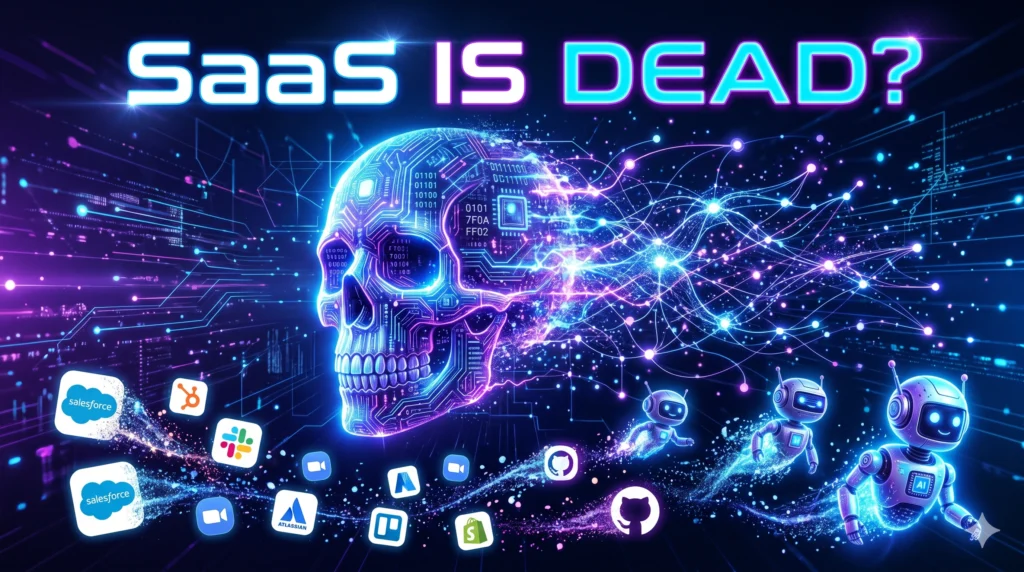
First, Why Are People Saying SaaS Is Dead?
There are two main reasons this conversation has exploded in 2026, and both of them come back to one thing – artificial intelligence.
Reason 1: Building Software Got 10x Cheaper
Not long ago, if you wanted to build a SaaS product, you needed a big team of developers, months of work, and a serious budget. That was the barrier to entry. Most people could not just spin up a competitor overnight.
AI changed that completely.
Today, with the right AI tools, a small team – or even a single founder – can build what used to take twenty engineers. The cost to develop software has dropped by roughly ten times compared to just a few years ago. That means the wall that kept competitors out is much, much lower now.
When building something becomes cheap and fast, more people try to build it. And that is exactly what is happening.
Reason 2: The Competition Explosion
Because software is now cheaper to build, there has been a flood of new players entering every market. You have two types showing up everywhere:
- VC-backed startups – Investors are pouring money into AI-native software companies that are built from the ground up with artificial intelligence. These startups move fast, charge less, and often do things better than products that were built years ago without AI in mind.
- In-house solutions – Big companies are no longer just buying SaaS tools. They are building their own. With AI assistants and modern development platforms, an internal IT team can build a custom tool in weeks. Why pay $50,000 a year for a subscription when you can build something that fits your exact needs for a one-time cost?
Both of these forces together are pushing down what SaaS companies can charge. Pricing power – the ability to say “this tool is worth this price and people will pay it” – is getting squeezed from every direction.
So Is SaaS Actually Dead?
Here is my honest take: No, SaaS is not dead. But the easy version of SaaS is.
What I mean by that is this – the era where you could build a pretty basic tool, slap a monthly subscription on it, and grow just by riding the cloud wave? That era is over. Completely.
But the companies that are actually solving real, specific problems in a smart way? They are doing better than ever.
The mistake a lot of people make is looking at the stock market dip and treating it like a death certificate. But stocks falling does not mean an industry is dying. It means the market is repricing expectations. And right now, the market is asking a very fair question: Which SaaS companies actually have a long-term edge, and which ones are just coasting?
The ones without a clear answer to that question are the ones struggling.
What Is Actually Changing in the SaaS World?
Let me walk you through the real shifts happening right now – the ones that matter for founders, buyers, and investors.
1. Generic Tools Are Losing. Specific Tools Are Winning.
A horizontal SaaS product – meaning something built for everyone, like a general project management tool – is in a tough spot right now. Because if your product does a little bit of everything for everyone, AI can now do most of that automatically.
But vertical SaaS – software built specifically for one industry or one type of problem – is actually growing. Think of software built specifically for construction companies, or dental clinics, or law firms. These tools understand the exact language, the exact workflows, and the exact compliance needs of that industry. AI cannot just replace that overnight.
2. You Cannot Just Charge for the Software Anymore
The old SaaS model was simple: charge per seat, every month, forever. That model made a lot of people very rich for a long time.
That model is breaking down.
Buyers in 2026 want to pay for outcomes and results, not just access. If your tool is not saving them time, making them money, or solving a real pain point – they are going to cancel. And with AI alternatives popping up everywhere, switching is easier than ever.
The SaaS companies that are thriving are the ones that have shifted to usage-based pricing, or outcome-based pricing. You pay for what you actually use. You pay when the software actually delivers value.

3. AI Agents Are Being Built Into Everything
The most interesting trend right now is that SaaS tools are no longer just software you log in to and click around. They are becoming active agents that do things for you.
You tell the software what you want. It figures out how to do it. It takes action on your behalf.
This is a massive shift. It is the difference between a tool and an employee. The companies that are ahead of this curve are building products that feel less like software and more like a teammate who actually understands your business.
What Should SaaS Founders Do Right Now?
If you are building a SaaS product or thinking about starting one, here is what I would focus on:
- Go narrow, not wide. Pick a specific industry or a very specific problem. Depth beats breadth right now. A tool that does one thing perfectly for a particular niche is far more defensible than something that tries to be useful for everyone.
- Make the value obvious. Your customers need to feel the value of your product immediately. If someone has to use it for three months before they realize it is working, that is three months they might cancel. Show results fast.
- Think about AI from day one. If you are building something without thinking about how AI fits into it, you are already behind. The best products right now are using AI to do the heavy lifting so users can focus on what actually matters to them.
- Do not compete on price alone. If your main advantage is being cheaper, someone will always come along who is cheaper than you. Build something people genuinely love and find useful.
What Should SaaS Buyers Know Right Now?
If you are on the buying side – a business choosing which tools to invest in – here is what to keep in mind:
The market is actually in your favor right now. SaaS vendors are under more pressure to prove their worth than they have ever been. That means you have more negotiating power. Ask for better pricing. Ask for longer trial periods. Ask what results you can actually expect.
Also be thoughtful about locking into long contracts with tools that might not look the same in 18 months. The pace of change in software right now is genuinely fast. A flexible, month-to-month arrangement might cost a little more upfront but save you from being stuck with something outdated.
The Bottom Line
SaaS is not dead. What is dying is laziness in SaaS.
The companies that built on top of a simple idea, charged a monthly fee, and never really asked themselves why customers should keep paying – those companies are in trouble. And honestly, a bit of that pressure is healthy for the industry.
The companies that are genuinely useful, that solve specific real problems, that use AI to make their products smarter and faster, and that treat their customers like partners rather than just subscribers – those companies are going to come out of this stronger than they went in.
The next wave of great SaaS products is already being built. They just look a little different than what we were used to.

Quick Summary
- SaaS stock prices have dropped and the market is worried, but that does not mean the industry is finished.
- AI has made building software dramatically cheaper, which brought in more competition and hurt pricing power.
- Generic, one-size-fits-all SaaS tools are struggling the most.
- Vertical, niche SaaS tools built for specific industries are holding up and growing.
- The future belongs to SaaS products that act more like intelligent agents than traditional software.
- For founders: go narrow, show value fast, and bake AI in from the start.
- For buyers: you have more leverage than ever – use it.
What do you think – is SaaS really dying, or just changing? Drop your thoughts in the comments below.