
That moment hits different when an invite pops up with nothing inside. Just a title. A link. You join anyway. Silence hangs until someone blurts out random thoughts. Minutes crawl by. Half an hour gone before it clicks – this could’ve been an email.
Folks tune out if the plan vanishes into thin air. Happens just as often when the document exists – just full of blurry lines, poorly sketched, left unread by everyone who got a copy.
Truth is out there. Crafting a solid meeting agenda takes little effort. Folks simply approach it wrong. Instead of rushing through it like paperwork, they could see it as the core reason the gathering matters at all.
Picture this: your next meeting invite gets opened right away. Folks aren’t just skimming it – they’re reading closely, taking notes, getting ready. That kind of result doesn’t happen by accident. It starts with an agenda that grabs attention without flashiness. You can use these methods whether students are gathering after class, volunteers are checking in weekly, or coworkers log on remotely. The structure works across settings. Near the close, there will be fill-in-the-blank examples waiting – simple formats to borrow, tweak, send out.
Why Most Meeting Agendas Fail (And It’s Not What You Think)
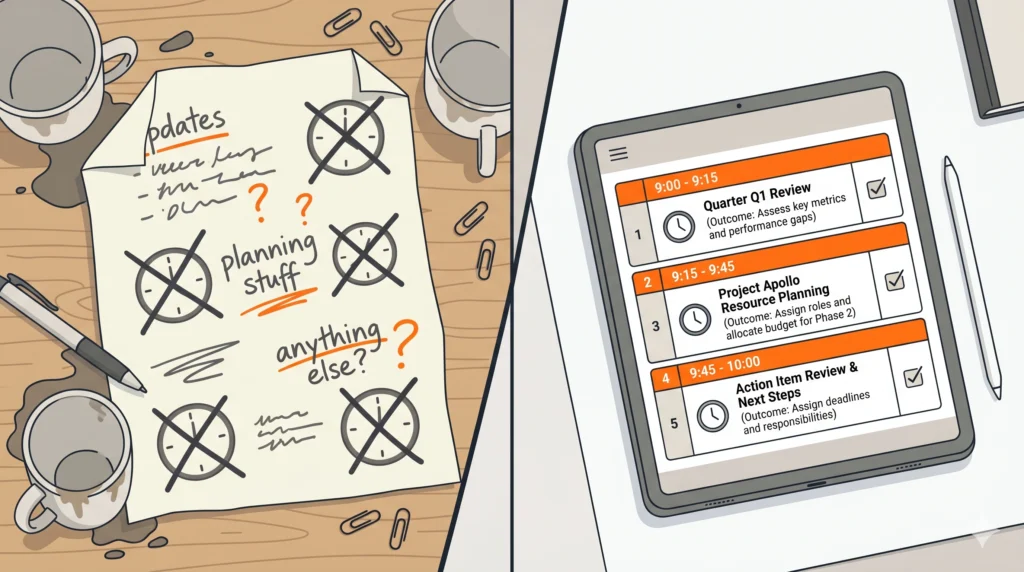
Here’s how it usually went down. Take Priya – she ran the college fest team. Each week, ahead of their Sunday meetups, she shared a plan. Something like this:
Sunday Meeting. First up, updates. After that comes planning stuff. Then anything else needing attention.
Not as tidy as it seems. Each attendee arrived confused by the word “updates.” Could mean location changes. Maybe money issues. Or something about the acts lined up. Clarity was missing, which left everyone unready. What should have lasted half an hour stretched into double that. More often than not, choices were pushed off until next Monday.
Most folks run into trouble crafting meeting agendas. Too vague, that’s the issue. Looks tidy on paper yet says almost nothing.
Something useful happens when time gets shaped ahead of schedule. People learn which subjects will come up, so there is no guessing later. Preparation steps sit clearly listed, meaning nobody arrives unsure. A clear timeframe appears, one that matches real minutes instead of hopes. Length stays honest because surprises waste energy.
If your plan hits all these points, it quietly outpaces most others floating around today.

What Is a Meeting Agenda, Really?
Funny thing is, I get how simple this might seem – just hear me out.
A meeting agenda sets out what will happen when people get together. True. Yet behind that idea of a list lies something more active – shaping how time gets used.
What you get isn’t merely an agenda. It’s a clear signal from the person leading the session – this is what we’ll talk about, exactly how long we’ll take, along with the outcome they expect by the end.
A meeting agenda shaped with real purpose gets attention. If it feels rushed – thrown together right before – it shows. That kind of effort makes folks disengage, sometimes even before walking in.
Picture walking into school. A teacher announces, “We’re wrapping up Tuesday’s grammar work.” That already feels clearer. Then comes talk about essay drafts – yours included. After that, details drop on how the test will run now. See? No surprises. Your brain settles. You brought the right notebook. The room hums differently when people grasp next steps. Uncertainty drains away. Simple words make plans real.
A solid plan shapes how things unfold during a session.
How to Write a Meeting Agenda: The Basics You Can’t Skip
Start With the Purpose, Not the Topics
What needs deciding before anyone walks out? Figure that first. Only then does it make sense to talk about steps. Skipping ahead muddles everything.
This sounds obvious but most people skip it. They just think “what do we need to talk about?” instead of “what do we need to walk away with?”
Something else entirely. When talk wanders on its own, decisions plant themselves in fixed spots.
Sure – imagine finishing school by organizing a small gathering. Instead of vague reminders such as “think about party plans,” go specific: decide on location, maybe School Hall rather than Community Center, then set spending limits right after. Pick one place, stick to it, know what you’re allowed to spend
See how the second version tells everyone what a successful outcome looks like? Someone prepping for that meeting knows they should come with their opinion on the venue, maybe some rough costs, maybe a reason one place is better than the other.
Write Out Each Agenda Item as a Full Sentence
This is one of the simplest changes you can make and it has a big effect.
Instead of: Budget Write: Review current expenses and decide if we need to request additional funding from the department.
Instead of: Website Write: Confirm which team members will handle the website update by end of month.
Full sentences tell people what the meeting is actually going to do with that topic. One-word items are basically meaningless.
Assign Time to Each Item
This is the part that makes folks uneasy – seems like a shot in the dark. Truth? It’s exactly that. And that’s okay.
Putting time guesses by tasks doesn’t aim at precision. Instead, it makes you question if squeezing twenty minutes of talk into a five-minute space is even realistic.
Here’s how it sets the scene without saying much. Slotting ten minutes means just a touch base, nothing deep. But when forty minutes shows up, that shifts things – now it’s clear heads need to be ready with ideas. Time on the clock quietly tells each person how wide to open their mind.
Start strong. Hit key points early, while attention spans hold firm. Because minds wander later, leave small stuff – updates, details – for last. Even if time spills past the limit, the core gets done. What really counts lands before focus fades.
The Anatomy of a Good Meeting Agenda
Let’s break down what should actually be on the page.
Meeting Header
This sounds boring but people often forget it. Put the meeting title, date, time, and location (or link) right at the top. If it’s a recurring meeting, include which number this is.
Example: Monthly Student Council Meeting #4 Date: Saturday, April 12 Time: 3:00 PM to 4:30 PM Location: Room 204 / Google Meet link
Who’s Running What
Who leads each agenda point? Write their name beside it. That way, everyone sees who owns what. It pushes one person to know the subject best. Being named means showing up ready – more than anyone else there.
Desired Outcome Per Item
This goes back to the purpose question. Alongside each item, note what a good outcome looks like. Is it a decision? A vote? Just sharing updates? That distinction matters a lot.
Pre-Reading or Preparation Notes
It helps when folks know what to do ahead of time. Try spelling it out clearly – like “Read the attached draft proposal.” Or maybe say, “Bring your two favorite choices for where we should go.” Skip fuzzy hints; those often get ignored. Without clear notes, most will show up unready. Clarity pulls everyone onto the same page.
How to Write a Meeting Agenda for Specific Situations
Group Project Meeting
Now here’s something – group meetings often go quiet except for one voice, others just scrolling screens. Sure, an agenda won’t wave a wand and change that, still, it makes a difference.
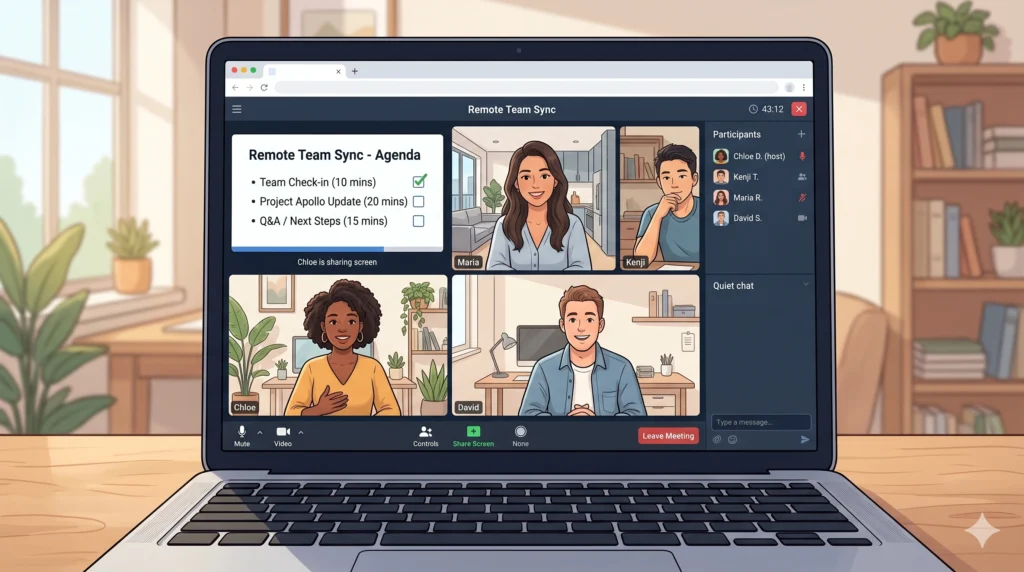
Start fast. A handful of topics only – three or four, tops – for sixty minutes. Kick off with everyone tossing out one thing they finished since the last meeting. Shift next to choices needing answers now. Tuck leftover notes toward the close; if brought up early, they swallow the clock.
Example for a project meeting:
1. Quick updates from each team member (10 min)
2. Start by going over the outline together, then decide who takes which part – spend about twenty five minutes on this
3. Give yourself ten minutes to finish a first version
4. Was there more worth mentioning? Takes about five minutes to go over it
This time around, things stay straightforward. Clarity comes through without extra steps. Once folks arrive, they understand exactly how to move forward.
For a Class or School Club Meeting
Ahead of each weekly talk, Arjun began sharing plans – simple outlines of what they’d cover. At first, some rolled their eyes, calling it too stiff for a student group. Then came the third gathering, when someone sent a note ahead of time, curious about one topic on the list. By week four, messages arrived almost daily, ideas tucked into subject lines, sparked by the clarity of that shared page. What felt rigid at the start slowly became something others leaned on.
A touch of warmth works well when planning club gatherings. Begin with something like “share updates, talk about whatever’s on your mind.” Let it breathe a little, skip the rigid structure. Not every moment needs to mirror an office meeting.
For a Work or Internship Setting
Start by stating the purpose clearly when drafting a work-related agenda – something many college interns handle. A single line up front works best to show what needs resolving. Example: Goal: Finalize the campaign’s direction plus lock down the Q2 posting schedule. What matters is clarity without extra words filling space.
Before reaching the list, that single sentence shapes what comes next. What follows fits within its frame. It arrives first, quietly guiding how each point lands. This opening steers without announcing itself. The mind adjusts, almost unnoticed. Each item afterward carries its influence. Not loud, but definite. A quiet force behind every detail.
Ready-to-Use Meeting Agenda Templates
Template 1: Basic Meeting Agenda
Meeting: [Name of Meeting] Date: [Date] Time: [Start Time] to [End Time] Location/Link: [Where]
Goal: [One sentence describing what we need to achieve]
Items: 1. Welcome and quick introductions (if new people) – 5 min – Led by: [Name] 2. [Agenda Item 1: written as a full sentence] – [Time] – Led by: [Name] 3. [Agenda Item 2: written as a full sentence] – [Time] – Led by: [Name] 4. [Agenda Item 3: written as a full sentence] – [Time] – Led by: [Name] 5. Action points and next steps – 10 min – Led by: [Name]
Please prepare before arriving: [Specific prep task or “none needed”]
Template 2: Project Team Meeting Agenda
Project: [Project Name] Meeting #: [Number] Date and Time: [Date, Time] Attendees: [Names]
Session Goal: Decide [X] and assign [Y]
1. Updates round (each person: one update, 1 min each) – 10 min 2. [Key decision to make] – 20 min 3. [Second key item or task to assign] – 15 min 4. Blockers and issues anyone is stuck on – 10 min 5. Confirm action items and who owns what – 5 min
Please read before the meeting: [Link or note]
Template 3: Quick Check-In Agenda (For Short Meetings)
Quick Sync: [Team/Group Name] Date: [Date] | Time: [Time] | 30 min max
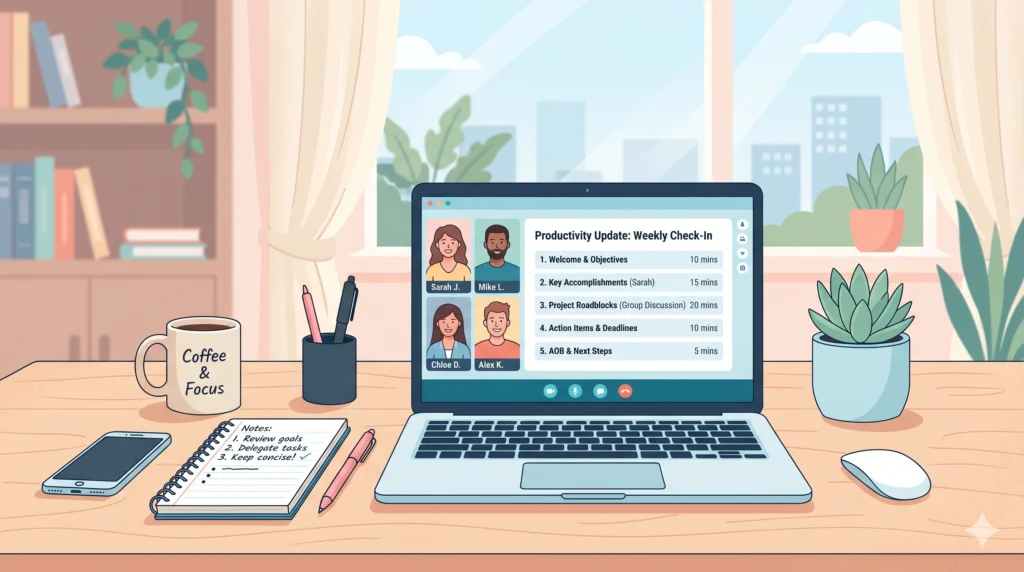
1. What did each person complete since last time? (2 min each) 2. One thing that’s blocked or needs a decision today 3. Next steps and who’s doing what
No prep needed unless otherwise noted.
Write a Meeting Agenda That Respects People’s Time
A thought that lands better when kept simple. Preparing a meeting agenda shows care. It quietly says: your time matters, so I organized ahead. That same effort? I hope you bring it too.
Picture this: an invite lands in your inbox, clear points listed, nothing vague. You see the topics ahead of time, so you gather thoughts, maybe review some notes. Walking into that room feels different – no guessing games. Most gatherings aren’t like that, though. Hours vanish daily inside fuzzy discussions with no direction. It adds up, quietly. A little clarity changes everything.
Starting with a clear plan often begins by writing down what needs to happen. One thing leads to another when purpose comes first, not steps. Details matter more once you stop speaking in generalities. Staying focused like this changes how tasks are handled, even conversations. People notice the shift, whether it’s meetings or daily work. Clarity has that kind of quiet effect.
Those who figure it out fast – students, workers alike – end up leading the key gatherings others depend on. Not by sticking to rules, yet through real reflection on why the gathering exists at all.
A Few Things That Make Agendas Go Wrong
Twelve topics packed into sixty minutes – seen it too often. The list stretches like a contract no one reads. Focus slips when there’s just not enough time. Each item gets less than five minutes, maybe even three. People skim the night before, if they look at all. Energy fades by number seven or eight. Time ticks past the hour while someone explains point eleven. What felt thorough becomes chaos.
A last-minute agenda, drafted the evening prior, often lands in attendees’ hands mere minutes before the meeting begins. When timing slips this far, what looks like structure turns into little more than a list of topics. Without earlier access, people can’t shape thoughts or gather necessary details. That delay changes its purpose completely. Instead of guiding conversation, it simply sequences moments.
On the flip side, some agendas stay frozen in time. Week after week, identical structure, same topics lined up just like before. Repeated so often they trace back to last month without a twist. Folks tune out since nothing on the page surprises them anymore.
Fresh pages work better, every single time, even when faces stay the same. This week, what choices truly matter? Since we last talked, what shifted underfoot? The answers shape what lands where.
Conclusion
A quick look at what this piece shared comes down to these points.
Picture where things should land when the meeting ends, then shape your list. For every point, craft a clear line showing why it matters, not only its title. Add how long you think it’ll take – close enough counts. Name who guides each piece right beside it. Pick a time well ahead, then let folks know what they’ll need. Share the details one full day prior or sooner.
A meeting agenda folks might actually glance at? This is how. Not some secret trick. Just paying attention to details, for once. Most skip them like they’re nothing.
A fresh agenda can feel tricky at the beginning – try using one of those examples shown earlier. Go with the simplest version first. After leading just a couple gatherings that actually follow an outline, changes become clear. Attendees arrive ready to speak up. Choices get made without long delays. Time wraps up right on schedule.
A beginning, those templates – never meant to last forever. Each team moves differently, so let the agenda shift as you go. Not about getting the paper right. It’s about leaving clear: who does what after the room empties.