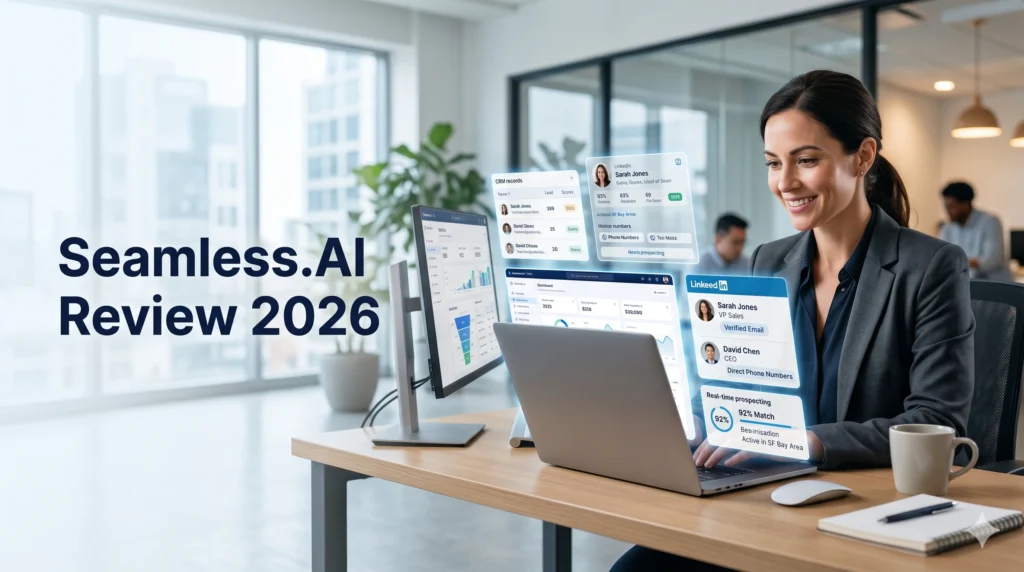
Most mornings start the same. Copying names from LinkedIn into a spreadsheet, one after another. Chasing down emails feels like digging through sand. Each detail gets typed slowly into the CRM. Fifty contacts later – hours vanish. Not one conversation happens with someone who might buy. This drag? Salespeople know it well. Time melts before real outreach begins. Seamless.AI claims to cut right through that mess.
Picture this: a tool that says it finds contact info fast. That promise pulls in over a million people globally. Marketing shouts about near-perfect precision – 98%, they claim. Yet behind the scenes, things shift. Users drop notes across G2, Capterra, even deep threads on Reddit. Their words paint something less polished than ads suggest. Some cheer quick results. Others hit dead ends or outdated emails.
Accuracy slips when data shifts daily. One moment you’re golden; next, chasing ghosts. Sales teams want reliability. This one wobbles under pressure. Worth trying? Depends who you are. For some, speed wins. For others, frustration builds too fast. The truth sits between extremes – not magic, not junk, just uneven. Your move hinges on tolerance for guesswork. Decide after seeing how often it stumbles. Not before.
What Is Seamless.AI and How Does It Work?
Right away, Seamless.AI acts like a live search tool for business contacts. Most tools dig into old stored records – this one doesn’t wait. When you start looking, it scans current online sources instantly. Emails pop up fast, along with phone numbers and firm info. Fresh results appear because it checks now, not yesterday.
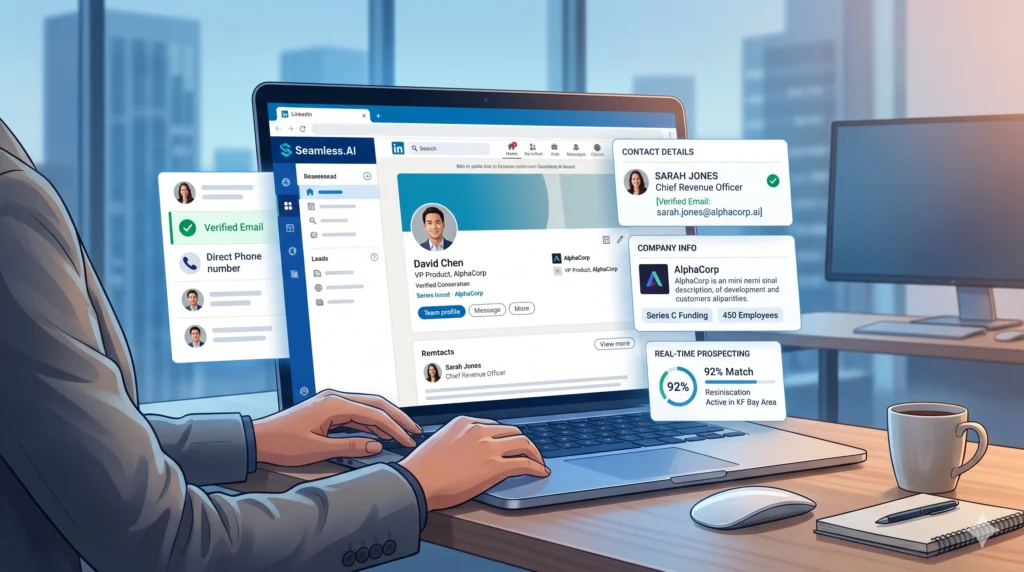
Out there, tucked inside a digital vault, lives data on more than 1.7 billion people plus profiles for 150 million businesses. While scrolling through LinkedIn using your browser, an add-on quietly waits – click once and it springs into motion. Instantly, artificial intelligence digs through layers of info, uncovering work emails, maybe even phone lines straight to desks, alongside firm background notes. Seconds pass before everything surfaces neatly arranged, able to slide right into spreadsheets or move directly into customer systems.
Started in 2015 by Brandon Bornancin, it now ranks among the go-to outreach tools for mid-sized sales teams. With links to Salesforce, HubSpot, Outreach, Salesloft, Pipedrive, along with several other CRMs, it fits neatly into existing workflows. Worldwide user numbers passed ten million by 2022, according to public figures. As of 2026, the focus quietly shifts – predictive insights and tailored messaging wrap around its basic people-finding function.
So that’s how it’s sold. What really happens when folks use it every single day? That comes next.
Seamless.AI Review 2026: The Features Worth Knowing About
The Real-Time Search Engine
This is what sets Seamless.AI apart from tools that rely on monthly database snapshots. Because it searches in real time, you’re more likely to get current information when a prospect has recently changed jobs or updated their contact details. That freshness matters in outbound sales, where a message sent to someone’s old email address wastes your credit, your time, and potentially damages your sender reputation.
Speedy searches stand out right away. Answers show up fast, often within moments. Name, business, role, field, or place – pick what fits your hunt. A tidy layout guides you, minus clutter. First-time visitors usually grasp how it works almost immediately.
Turns out there’s a downside. Searching live swaps accuracy for how quick it is. While pulling info in real time, the system gathers pieces as they come, leaving some facts up to date but others off track. Unlike certain alternatives, it skips comparing across several references. Getting something back quickly does not mean it’s ready to share without double-checking first.
The Chrome Extension on LinkedIn
Most salespeople rely on this tool every single day. After installing the add-on, open any LinkedIn page – suddenly an interface from Seamless.AI shows up. Press the option and out comes available contact details, piece by piece. It transforms a chore that took minutes into something done before you even think twice.
Speed really matters when reaching out to lots of people on LinkedIn. Building a list of two hundred contacts takes far less time using tools than handling each one by hand. Reviewers who like the tool mention this again and again – saving time shows up as a clear win.
The extension also works outside of LinkedIn. If you’re on a company’s website and see a name, you can right-click and search for that person directly. It’s a small feature but a useful one for research workflows that go beyond just LinkedIn.
Autopilot List Building
Picture this: Autopilot builds contact lists without you lifting a finger. Not search by search, but through smart rules you define first. Think industry type, where people work, their role, how big the company is. Once those are set, it works while you do something else. New matches appear like clockwork, tucked into your list. No clicking needed. The tool hunts quietly, filling gaps on its own.
When teams want big lists of prospects fast, this tool actually helps. Trouble starts because doing things automatically in bulk makes small mistakes much worse. Say hand searches find correct emails about seventy out of a hundred times – running the same process nonstop might flood results with broken contacts. Outcomes shift sharply when scale hits shaky ground.
Pitch Intelligence
This feature generates customized talking points and messaging suggestions based on a prospect’s profile and company. It pulls in information about the company’s industry, size, and apparent needs, then suggests angles for your outreach.
Most find it sparks ideas better than delivering finished work. When little public info exists about your subject, outputs often feel vague. People testing it say drafting gets quicker, though results rarely come ready to share. Editing remains necessary no matter what it produces.
Buyer Intent Data
On Pro and Enterprise plans, Seamless.AI includes buyer intent signals. This means the platform tracks which companies are actively researching topics related to what you sell, based on their online behavior across thousands of data points.
It makes sense when you think about it. Spotting a business diving into articles on sales tools or changing CRMs gives you a clue. That moment they’re researching? A conversation started right then hits differently compared to one pulled from nowhere. Instead of picking names off a spreadsheet like drawing straws, this kind of insight sharpens the focus. Timing shifts from guesswork to something closer to rhythm. Reaching out fits naturally because the need is already there, quietly showing itself. Order matters less when you follow signals instead.
In practice, the intent data on Seamless.AI is useful but not as refined as dedicated intent providers like Bombora or 6sense. It’s better for rough prioritization than precise targeting. Teams that hadn’t used intent data before often find it genuinely helpful. Teams coming from more advanced intent platforms may find Seamless.AI’s signals feel broad.
— Upload a CSV with names and companies, and Seamless.AI attempts to add verified emails and phone numbers to each record.
This is handy for RevOps teams cleaning up messy CRM databases. It’s not always perfect, but it’s faster than doing it manually contact by contact.
Seamless.AI Review 2026: The Honest Look at Data Accuracy
Let me explain this simply, because it’s the most important part of this whole review.
Seamless.AI markets a 98% accuracy rate. That number is on their G2 listing and in their marketing materials. When you look at what actual users report, the real-world picture is meaningfully different.
Across G2 and Reddit, email accuracy from actual user tests tends to land somewhere between 60% and 80%. Phone number accuracy is lower, often around 45% to 60%. One G2 reviewer described testing 100 contacts and getting valid work emails for only 58 of them. That’s not a sample of frustrated outliers either. The pattern holds across hundreds of reviews and across years of feedback.
What explains the gap? The real-time search model is designed for speed, not for thorough verification. It aggregates information quickly but doesn’t necessarily cross-check results against multiple sources before returning them. When someone has changed jobs recently, when they work at a smaller company with fewer digital footprints, or when they’re in an international market outside the US, accuracy drops noticeably.
For a team doing email outreach, a 25% to 30% bounce rate isn’t just wasteful in terms of credits. It damages your email domain’s reputation. Email providers track bounce rates. Once your domain starts getting flagged for high bounces, future emails start landing in spam folders even for valid addresses. That’s a real operational risk that goes beyond just wasted list credits.
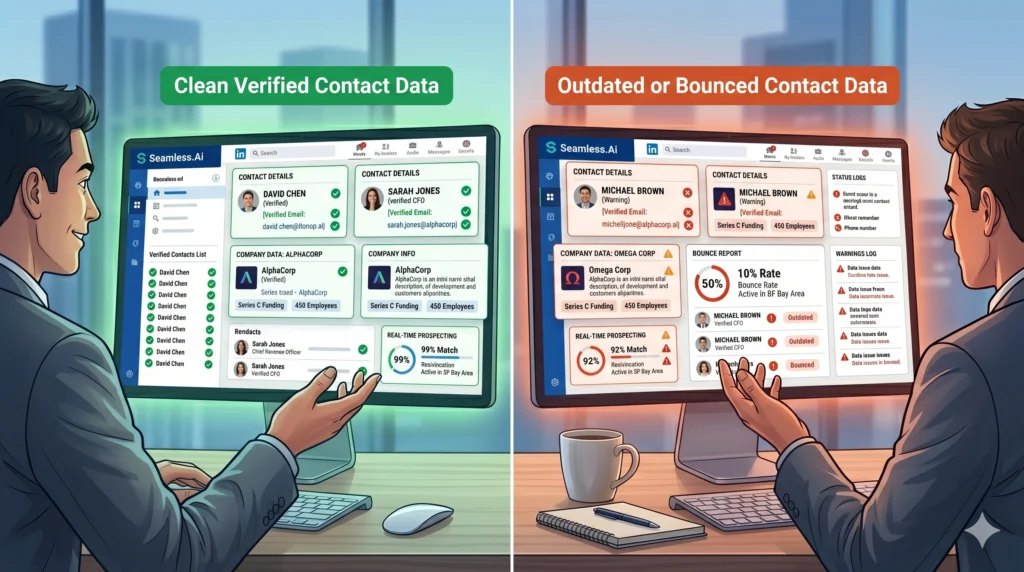
Phone number accuracy is a separate issue. Multiple reviewers mention numbers being outdated, sometimes connected to someone who used to have that job title at that company, and occasionally routing to entirely wrong people. For a team whose prospecting relies on cold calling, this isn’t a minor annoyance.
Does Seamless.AI work at all? Yes, genuinely. For large US companies with significant public data available, accuracy is better. The tool does find contact information that reps couldn’t easily get otherwise. But the gap between the marketed accuracy rate and the actual user experience is wide enough that you should plan for a verification step rather than trusting export lists out of the box.
Seamless.AI Pricing in 2026: What It Actually Costs
Here’s where things get complicated, and you deserve a straight answer.
The free plan gives you fifty credits per month. That’s enough to test whether the data quality works for a handful of your target contacts, but nowhere near enough for real prospecting. It’s a trial, not a working tier.
The Basic plan costs approximately $147 per month when billed annually. That gives you 250 credits per month. The Pro plan reportedly runs somewhere between $147 and $299 per user per month depending on your team size and what you negotiate. Seamless.AI doesn’t publish Pro pricing publicly. You have to sit through a sales call to get a number, and different customers end up paying different rates for the same plan. Enterprise pricing is fully custom.
The credit system works on a flat model: one credit per contact search. But here’s what catches people off guard. You spend the credit when you run the search, not when you get a good result. If the email bounces or the phone number is wrong, the credit is still gone. On the Basic plan with 250 credits, if you’re hitting 70% email accuracy, you’re effectively getting about 175 usable contacts for your $147. That works out to closer to $0.84 per working contact rather than the math you’d do at face value.
Pro plan credits refresh daily and expire every night. If your team has a slow week because of holidays or a territory shift or just an unusually busy time with existing accounts, those daily credits disappear without carrying forward. That’s a structural cost that catches teams off guard.
Actual spending often runs 40% to 60% above the quoted monthly price once you factor in credit top-up packs, which cost $49 for 500 additional credits. One user described paying $79 per user per month for a five-person team, burning through credits inside three weeks, and ending up at $177 per user per month after add-ons. The advertised price and the actual invoice are often quite different.
The Cancellation Issue: Read This Before You Sign
This is the section I want to make sure you don’t skip, because it shows up in more reviews than literally any feature complaint.
Seamless.AI operates on annual contracts. Monthly billing is not standard for the paid tiers. When you sign up, you’re committing to twelve months, and the contract auto-renews unless you submit a non-renewal form at least sixty days before your renewal date.
That sixty-day window matters more than it sounds. If you miss it by even one day, you’re legally bound to another full year. You can’t cancel by email. You can’t cancel by removing your payment method. The process requires completing a specific workflow inside the platform and then participating in a call. Multiple Trustpilot and G2 reviewers describe submitting cancellation requests and still being charged, being told that their request wasn’t processed correctly, or being transferred between departments repeatedly while retention offers were made instead of their cancellation being handled.
Where Seamless.AI Works Best (And Where It Doesn’t)
For high-volume outbound teams prospecting primarily into large US companies, Seamless.AI delivers genuine time savings. The search speed is real. The Chrome extension on LinkedIn is convenient. The database is large enough that most well-documented companies have at least basic contact data available.
SDRs at mid-market companies who need to build big lists fast often find the tool useful even knowing that some contacts won’t be perfectly accurate. A 70% hit rate still saves enormous amounts of time compared to manual research, especially when you’re targeting companies with at least fifty employees and a reasonable online presence.
Where it struggles is smaller companies and international markets. If you’re targeting SMBs with under twenty employees, startups in niche spaces, or companies outside North America, data accuracy drops noticeably. Contact records are sparser, job titles change faster, and Seamless.AI’s real-time search has less source material to draw from.
GDPR compliance for European contacts is another concern. Seamless.AI’s coverage doesn’t fully address the requirements that come with outreaching into Europe, which matters for teams that need to follow data privacy regulations carefully. If you get this wrong, it’s not just a list quality problem, it’s a legal exposure.
Customer support is a consistent weak point. Getting timely responses to issues during onboarding or when data problems arise is frequently mentioned as a frustration. Some teams describe going days without a meaningful response when they hit integration problems or billing questions. If something goes wrong and you need help quickly, you may be waiting longer than feels reasonable.
How Seamless.AI Compares to Apollo and ZoomInfo
Apollo.io lets users do more without paying, bundling email workflows right in. Budget-conscious groups searching for search plus contact tools tend to find it fits better. Instead of demanding yearly payments like Seamless.AI, access stays flexible month to month. That openness cuts down on early commitment stress. Pricing details sit clearly visible, skipping guesswork. One tool gives outreach power while keeping entry costs low.
Price tags tilt heavily toward ZoomInfo, yet its data feels sharper, reaches wider, lands safer under global privacy rules. When precise details shape profit lines, that extra spending often pays off through reliability. Smaller groups usually blink at the numbers involved here. A single starting access point hovers near fifteen grand each calendar year – suddenly budgets shift from casual chats to serious talks compared to what Seamless.AI asks up front.
Most people suggest Cognism when working with Europe – mainly thanks to accurate mobile numbers checked by phone and tighter rules around GDPR. Should your main region be EMEA, giving it proper attention makes sense before choosing Seamless.AI. In everyday situations, contact details from Cognism tend to work far more reliably across Europe. Staying within legal lines also feels smoother due to stricter handling of private information.
Another name you hear now and then? LeadIQ. When it comes to reaching out right inside LinkedIn, this one zeroes in better. Tracking key contacts works more cleanly here compared to Seamless.AI. If your team runs everything through LinkedIn Sales Navigator, the Chrome tool fits like an old glove. Smoother steps, yes – but less data waiting behind the scenes. Fewer tools packed in, too, if that matters to how you work.
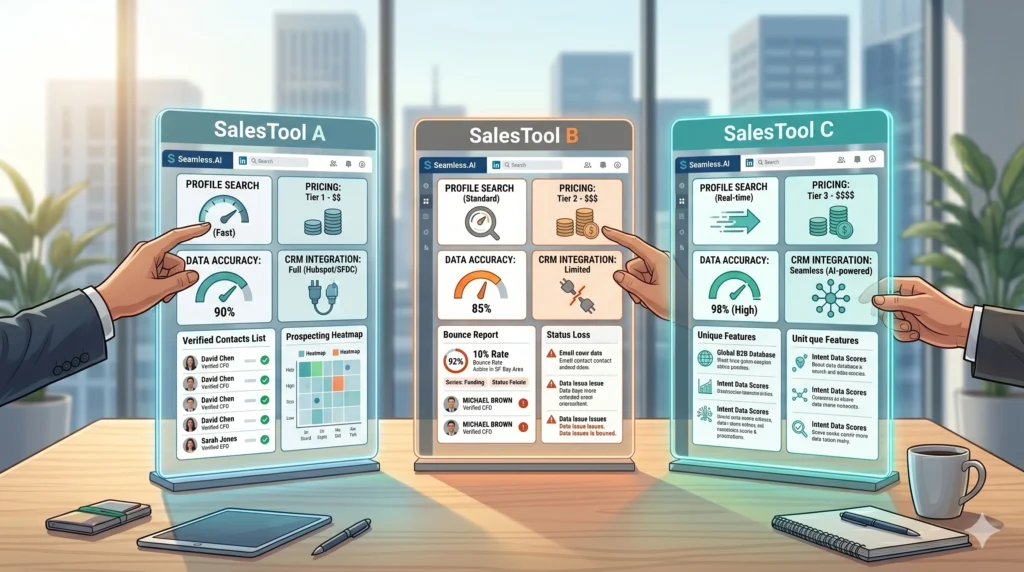
Here’s what it comes down to: Seamless.AI fits somewhere in the middle of the pack. While speed gives it an edge over certain tools, its pricing hits lower than ZoomInfo’s steep rates. Accuracy though? Not quite at Cognism’s level. For groups wanting combined contact details plus outreach workflows, Apollo simply covers more ground. What stands out is availability – not perfection.
Seamless.AI Review 2026: Final Verdict
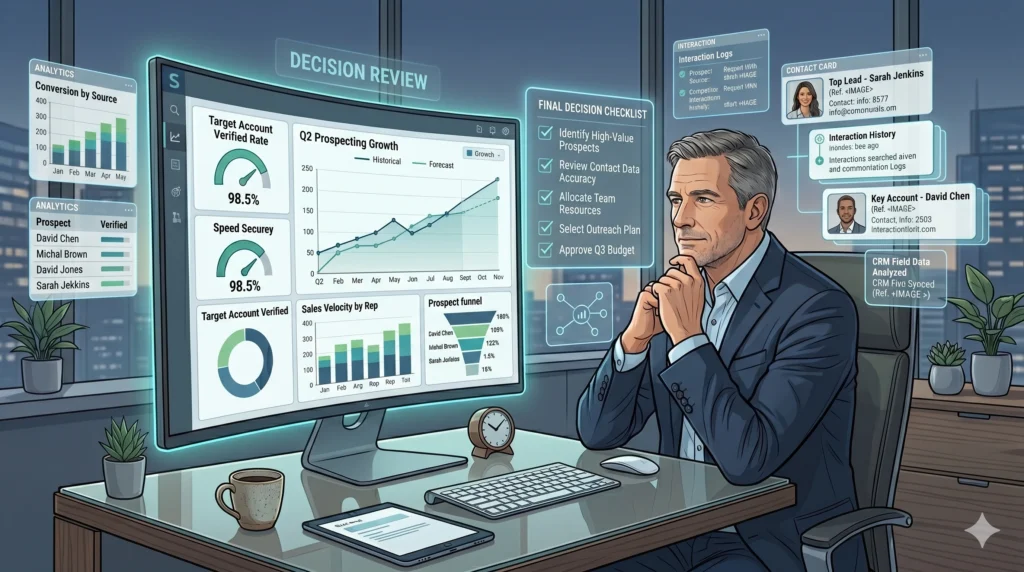
Seamless.AI does what it says it does in the most basic sense. It finds contact data quickly. The Chrome extension saves real time on LinkedIn. For high-volume prospecting in the US market, reps who learn to work around the accuracy limitations and always run a verification step on their exported lists can make it a productive part of their workflow.
But this Seamless.AI Review 2026 has to be honest about the parts that aren’t working well. The accuracy gap between marketing claims and real-world results is significant. The pricing opacity makes budgeting difficult. The credit system punishes you for spending credits on bad data. And the contract and cancellation practices have generated more complaints than any feature concern, which tells you something important about the buying experience and whether this company treats its customers fairly when things go sideways.
If you’re evaluating Seamless.AI for your team, start with the free plan and test it against your actual target market. Run fifty contacts through it, check how many emails actually deliver, and see whether the phone numbers hold up. That test will tell you more than any review can. If the accuracy is acceptable for your targets, and you’re ready to read the contract carefully before signing, it can work. If accuracy is a hard requirement or your market is heavily international, look at Cognism, Apollo, or ZoomInfo before committing to an annual Seamless.AI contract. The platform isn’t right or wrong in the abstract. It depends entirely on what you’re trying to do, what accuracy variance you can absorb, and whether you’re willing to manage the contract terms carefully from day one.