You are working on a big school project, and your group isnt matching up. One person takes all the ideas, anothers on their phone, and everyone just feels stuck. Thats real, right? Team, building steps in here, dont think its just another teacher, imposed task. Its actually what turns a group of random classmates into a real team.
They laugh together, understand each other faster, and even manage the presentation without any stress. I have been helping Employees for over ten years, giving them simple tips to make school a lot easier for them. After interacting with hundreds of teens and young adults, Im convinced: people dont like doing things that they have to force themselves to do. So I am sharing 67 enjoyable team implementing games only students.
Planning for a club function, sports team cheer, team bonding in study hall, things to do that are simple, inexpensive, and sure to work at creating real connections are given. We will discuss various aspects, from short and interesting conversation starters to loud and exciting outdoor games as well as some screen, based games for when one is at home.
Everything is explained as if we were having coffee after class. Stay with us because at the end of it, you will have a set of tools for making your group outings great. Are you ready? Let’s change the feeling of teamwork from being a drudgery to a fun game oriented activity.

Why Team-Building Rocks for Employees Like You
Before we get started on the games, let’s quickly discuss why this stuff is important. You know how sometimes group work never seems to end? The research I’ve come across, such as those done by educational experts at Harvard, suggests that teams that spend time playing are more likely to stay together.
Actually, one of the studies showed that Employees who participated in team activities on a regular basis were able to increase their grades by as much as 20 percent since they had learned to listen to one another and to share their ideas without involving themselves in any kind of drama. Imagine yourself being a student at a university, and you are going to be participating in study groups as well as clubs; further on in life, it is going to be very essential that you have these skills at your disposal.
Meanwhile, it is solely about making friends and becoming a little less of a stranger in the noisy and confusing corridors. Many Employees have even asked me, “Isn’t this just time consuming though?” Not at all! In fact, these sessions may last anywhere from 10 minutes to an hour, but they definitely contribute to building up trust, reducing fights, and even helping the learners to remember the lesson for a longer period of time. Picture your history group doing a skit based on the timeline, which was quite yawn, inducing for them only because you all have been rehearsing throwing ideas at each other. Sweet, isn’t it? Well, now the time comes for the enjoyable stuff.
The Benefits You’ll Notice Right Away
- Stronger Friendships: Sharing laughs breaks down walls faster than any icebreaker speech.
- Better Problem-Solving: Games teach you to think on your feet, just like in exams.
- Less Stress: When everyone’s comfy, group stress drops, and you focus more.
I’ve seen it in action with a high school debate club I mentored; after one session, arguments turned into high-fives. You can do this too!
Icebreaker Games: Starting Conversations Without the Awkwardness (Activities 1-15)
Icebreakers serve as a warm, up session before a game, energy, raising without causing sweat. Here are the first 15 that work very well for the beginning of a school year, a new club meeting, or when you have a combination of shy and talkative children. They are fast, require no materials, and are about revealing yourself. The aim? To make everyone feel included so that no one ends up in a corner different TikTok.
Let’s dissect them one by one. I will describe a little which one then I’ll share a student story and finally I will tell you why it is appropriate for your age. Also, you have to keep in mind the main thing here is that they are fun, not serious, definitely no personal or family history sharing. However, of course, if someone gives a hint of wanting to open up you can go deeper.
Classic Sharing Starters
- Share Two Real Facts and One Made-Up Story Okay, here is the thing: Everyone thinks of three quick things about themselves. Two of the things must be true, like “I ate pizza for breakfast three days in a row, ” and one must be the fake one, e.g. “I can juggle flaming torches.” The game continues as everyone takes a turn to tell their truths and lie, and then everyone votes on what they think is the lie. The funniest part is the laughter when someone is tricked! Step by Step: Decide your set secretly (2 mins), disclose publicly (1 min each), discuss over guesses (5 mins). Total: 15, 20 minutes for 5, 15 participants. The reason it benefits the students: Young people love surprises and this game is a way of unveiling one’s fun personality without any pressure. Actually, at a college dorm I know, it even resulted in a roommate’s beatboxing skill being discovered and that immediately brought them together! Expert tip: If someone feels shy or doesn’t want to participate, it is okay for them to say no the first time and then join in the next round. What is the benefit? One develops empathy and this is one of the ways of lessening the bullying mood in groups!
- Pick a Coin and Spill a Memory Grab some spare change, pennies work great. Each person selects one and chats about what was happening in their life the year on the coin. Was it a family trip or your first bike crash? Keep it short and sweet. Step-by-Step: Distribute coins (1 min), share stories (2 mins each), wrap with “What’s one takeaway?” (5 mins). Fits 8+ folks in 20 minutes. Student Scenario: Imagine a freshman orientation, a kid shares about turning 10 during a pandemic lockdown. Suddenly, half the group nods along with their own tales. Magic! Common Doubt: “What if memories are sad?” Answer: Steer to positives, like “What fun thing came from it?” This boosts emotional smarts, key for handling school drama.
- One-Word Mood Check Super simple: Go around and say just one word for how you’re feeling today, like “zesty” or “zombie.” Write them on a board for a group vibe check. Step-by-Step: Explain rules (1 min), share in circle or chat (30 secs each), discuss patterns (5 mins). Any size group, 10 minutes flat. Real-Life Example: In a high school art class, words like “inspired” led to a collaborative mural. No planning needed, just pure energy. Why for You: It normalizes tough days, teaching that it’s okay to not be “on” all the time. Plus, it’s a gateway to deeper talks.
- Emoji or Pic That Fits Your Vibe Grab your phone. Search for an emoji that fits how youre feeling, sunny beach for calm, storm for stressed. Just explain it in 30 seconds. Start quietly (one minute), show it (one minute each), then pick the best ones (three minutes). Works well for five to ten people in fifteen minutes. Think of it like picking a filter for your story, but for daily life. A college friend picked a pizza emoji for being hungry during finals, everyone laughed and shared food. Try this in online classes too, and just share your screen with remote friends.
- Line Up by Birthday, No Words Allowed Challenge: Make a birthday line January to December only by using nodding, pointing and other gestures. No talking allowed! Step, by, step: Set the space (1 minute), try lineup (5, 10 minutes), reveal and laugh (5 minutes). Good for 8+, 10, 15 minutes. Student Story: A middle school camping group made the most of it by turning the “arguing” charades into a comedy show. Result? Instant inside jokes. Benefit Breakdown: Enhances recognition of non, verbal signals, which is extremely helpful during presentations or job interviews. Doubt cleared: “What if it’s too silly?” Go for it, caretlessness is = safety!
Quick Personality Peeks
- Guess My Secret Identity Tape celebrity/character nametags on people’s backs. While moving around, ask yes/no questions to the others in order to print who you are. Step, by, Step: Prep tags (5 mins), mingle and question (10 mins), reveal game (5 mins). > 10 people, 20 minutes.Why Employees Love It: It seems like playing a game, not learning.One drama club kid figured out he was “Harry Potter” and they talked about the choice of wands. The game can be expanded: Compare it to “Among Us, ” the same detective fun, but live. Besides, it teaches attentive listening, a skill that can save group projects.
- Bring Something Special to Share Traditional show, and, tell: Bring along a small item that holds a personal meaning, for example, a lucky keychain, and briefly tell its story. Virtual? Take a picture. Step, by, Step: 1. Collect items (prep ahead) 2. Share (2, 3 mins) 3. Q&A (2 mins each) No. of participants: 5, 12, Time: 20, 30 minutes Scenario: At a science fair team, a fossil rock was used as a catalyst to start discussions on dinosaurs and finally the talks linked to their dino, themed poster. Motivating Note: This really helps us build up our vulnerability strength in a very gradual and gentle manner. Quite a few people worry, “What if I get embarrassed?” Share what is comfortable to you, after all, it’s your story.
- Hunt for Common Ground Pair up, talk for a minute. Brainstorm three things you share, like snacks or dream places. Spend five minutes thinking, two to share with the group. Keep it going for 10 to 15 minutes. One team noticed everyone liked old cartoons. Next practice, they cheered with cartoon voices. Seems like it works well. Probably brings people closer. Table of Wins:
| Common Trait | Why It Bonds | Student Perk |
| Shared Hobby | Sparks chats | Less alone time |
| Funny Fail | Laughs heal | Stress relief |
| Big Dream | Inspires | Goal-sharing boost |
| Tip: Use for diverse groups; highlights unity. |
- Baby Photo Mystery Everyone emails or shows a kid pic beforehand. Guess who’s who as they pop up. Step-by-Step: Prep photos (ahead), display and guess (10 mins), stories (5 mins each). Any group, 15 minutes. Heartwarmer: A college freshman group cooed over braces and bowl cuts, turning strangers into story-sharers. Doubt Buster: “Privacy issues?” Keep it fun-only; no judgments. Benefits: Humanizes everyone, reduces cliques.
- Shout-Out Circle Sit in a circle. Each person shares a true praise for the next, like Youre great at breaking down math. First, show it for one minute. Then move around, 30 seconds per person. End with a three, minute reflection. Works for kids 8 and up. Takes about 10 minutes. Once, in a band practice, someone said, Your rhythm saves us, and the songs got tighter. Why? Compliments help confidence. Science shows they trigger happy chemicals in the body. Try this every day for better mood.
- Pick Your Crazy Choice Throw out “Would you rather” questions: Fly like a bird or swim like a fish? Discuss why. Step-by-Step: List 5-10 questions (prep), vote and chat (2 mins each). Any size, 15 minutes. Fun Twist: A study group picked “time travel vs. invisibility,” debates flowed into history notes. Analogy: Like truth or dare, but zero risk. Helps reveal values without prying.
- Things I’ve Never Done Say “Never have I ever…” like “eaten sushi,” raise hands if you have. Keep it school-safe. Step-by-Step: Rules chat (2 mins), 10 rounds (1 min each), wrap laughs (3 mins). 6-12, 20 minutes. Scenario: Youth group uncovered travel tales, planning a “bucket list” wall. Benefit: Shares experiences equally; great for introverts to observe first.
- Clue Me In on a Friend Draw three hints about a classmate (talent hobby quirk); group guesses.Step, by, Step: Prep clues privately (3 mins), present (1 min each), guess (5 mins).Suitable for 8 years and over, 15 minutes duration.Example: “Loves baking fails” made a home ec class do cookie swaps.Tip: For fairness, rotate drawers.
- Alphabet Animal Game My pet is an awesome alligator that, A Admiringly squatted on a small island in our pond, B Began befriending me and my little sister, without hesitation, C Chased away any stranger who tried to approach our home. D Devoured only fish and fruits, always keeping healthy.
- Fill-in-the-Blank Tales Create silly stories with mad libs: Nouns verbs adjectives from the group. Step, by, Step:1. Choose a template (2 mins)2. Gather words (5 mins)3. Read aloud (5 mins) 5, 10, 15 minutes. Case Study: Writing club produced a story called “The Epic School Heist, ” which inspired them to write essays. Expansion: Language arts connections; vocabulary games.
These icebreakers aren’t just fillers, they’re the glue for your crew. After trying a few, you’ll notice chats flow easier in class. Many Employees tell me it cuts first-day jitters by half.
Indoor Games: Desk-Side Fun That Won’t Get You in Trouble (Activities 16-35)
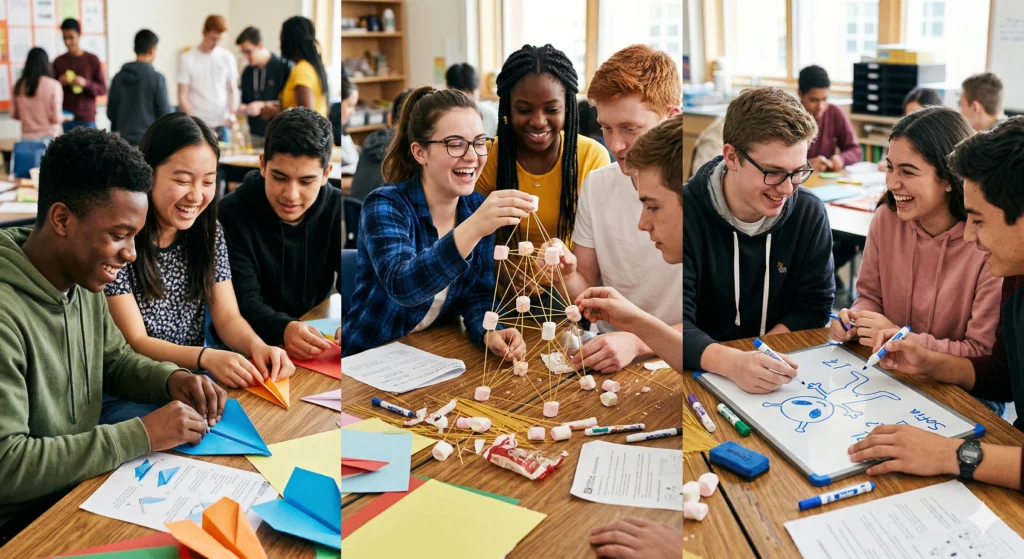
Stuck inside because of rain or a packed schedule? No sweat, these next 20 use classroom stuff like paper and chairs for big laughs. They’re great for study halls, lunch breaks, or club rooms. Focus is on teamwork without mess, helping you practice communication in tight spaces. I’ll walk you through each with steps, a teen twist, and why it levels up your group game.
Drawing and Building Challenges
- Draw What I Say, Back to Back Pairs sit back-to-back: One describes a simple shape (like a house with extras), the other draws. Then switch and compare. Step-by-Step: Pair up, describe (3 mins), draw (3 mins), reveal and fix (4 mins). Pairs, 15 minutes. Student Angle: Art class duo drew a “flying elephant,” giggles led to better feedback skills. Why It Works: Like telephone game, but visual. Benefit: Improves how you explain ideas, key for reports. Doubt: “I’m bad at drawing!” No worries, it’s the effort that counts.
- Rope Square Puzzle Blindfold the group (or eyes closed), hand a rope, and guide verbally to form a perfect square. Step-by-Step: Blindfolds on (1 min), instructions (2 mins), build (10 mins), check (2 mins). 6-10, 20 minutes. Scenario: Math club used it for geometry ties, measured success with rulers. Analogy: Herding cats, but with directions. Teaches patience, a must for group deadlines.
- Tower of Spaghetti Dreams With dry pasta, string, and a marshmallow, build the tallest freestanding tower in 18 minutes. Step-by-Step: Divide supplies (2 mins), plan (3 mins), build (10 mins), measure (3 mins). 4-8 per team. Real Win: Engineering Employees prototyped bridges after, grades soared. Table Comparison:
| Strategy | Pro | Con | Tip for Students |
| Base First | Stable | Slow | Test wobbles |
| Top Down | Creative | Crashes | Marshmallow last |
| Team Roles | Fast | Arguments | Assign early |
| Motivation: Fails teach resilience, every topple is a lesson. |
- Guide Through the Obstacle Maze One blindfolded navigates “mines” (books, bags) while partner directs with words only. Step-by-Step: Set maze (5 mins), guide (5 mins each pair), debrief (5 mins). Pairs, 20 minutes. Story: PE class built trust for relay races. Benefit: Echoes real-life following instructions, like lab safety.
- Lego Memory Match One builds a small Lego thing, peeks for 30 secs, then team recreates from description. Step-by-Step: Build secret (5 mins), memorize (1 min), describe/build (15 mins), compare. 4-8, 25 minutes. Twist: Robotics club linked to coding logic. Tip: Use phone timers for fairness.
Puzzle and Movement Mixers
- Paper Airplane Showdown Fold planes from scrap paper, then compete on how far or how well your plane flies. Step, by, Step: 6, 12, 20 minutes. Example: Lunch bunch made “airplane evolution, ” designs improved with feedback. Why Fun: Low stakes, high creativity. Benefits aerodynamics chats for science fans.
- Tarp Flip Frenzy Stand on a tarp, flip it over without moving, make each win smaller. Start big, just one minute. Try again for ten minutes. Celebrate for four. Six to ten, then fifteen. Drama club doing stage blocking. Think of it like musical chairs, but team, based.
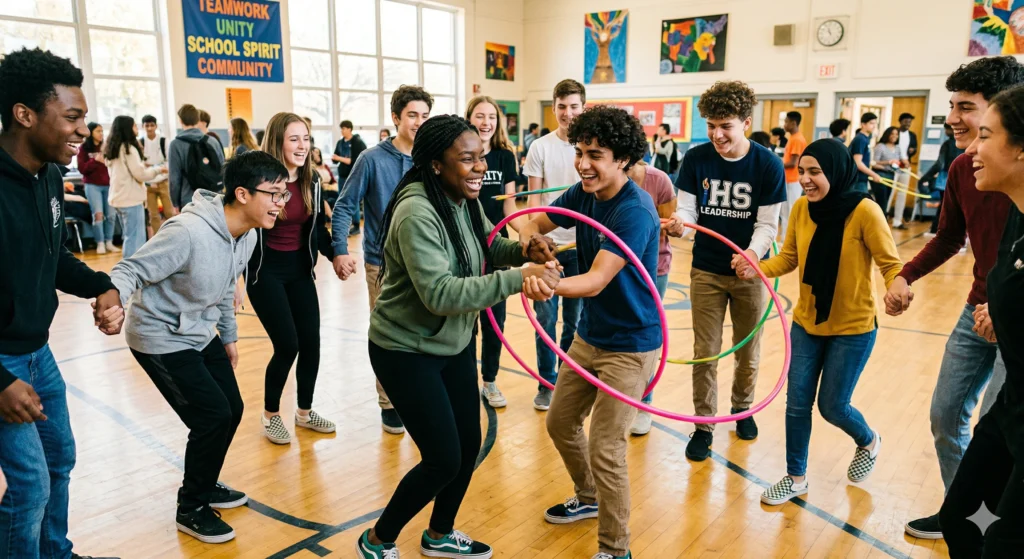
- Untangle the Human Chain Hold hands in a circle, weave into a knot, then untangle without releases. Step-by-Step: Form knot (2 mins), untangle (10-15 mins), high-five (3 mins). 8-12, 20 minutes. Heartfelt: Youth group shared “life knots” during debrief. Doubt: “Too physical?” Modify for space.
- Find Your Flavor Pair Label halves “salt” or “pepper” on backs; ask yes/no to find match. Step-by-Step: Labels on (2 mins), mingle questions (10 mins), pair reveals (5 mins). Even numbers, 20 minutes. Twist: Foodie club added recipe shares. Benefit: Networking practice.
- Direct the Blind Artist Team tells a blindfolded drawer what to sketch, an elephant on a bike? Step-by-Step: Choose object (2 mins), direct/draw (8 mins), vote (5 mins). 4-6, 15 minutes. Laughs: Art therapy session turned chaos to cheers.
- Trade Pieces Puzzle Race Each team gets a jigsaw with missing bits; barter to complete. Step-by-Step: Distribute (2 mins), trade/build (20 mins), finish line (5 mins). 4-12, 30 minutes. Example: Economics class tied to negotiation units. Table:
| Trade Tactic | Success Rate | Student Hack |
| Offer First | High | Smile big |
| Bluff Short | Medium | Know value |
| Team Vote | Low but Fun | Compromise |
- Quiz Your Classroom Knowledge Teams answer trivia on school history or pop trends. Step-by-Step: Prep questions (ahead), rounds (20 mins), winners (5 mins). Teams, 30 minutes. Scenario: Orientation week built pride.
- Memory Lane Wall Sticky notes with fave school moments; cluster themes. Step-by-Step: Write (10 mins), post/discuss (10 mins). Any, 20 minutes. Warm: Senior prank stories united underclassmen.
- Recall the Toss Sequence Toss objects in pattern; next person adds from memory. Step-by-Step: Demo (2 mins), chain (10 mins), reset (3 mins). 8+, 15 minutes. Tie-In: Memory tricks for tests.
- Build Your Dream Nation Groups invent a country: flag, rules, fun law. Step-by-Step: Brainstorm (10 mins), present (10 mins), vote (5 mins). 4-6, 25 minutes. Creative: Social studies extension.
- Rug Turnover Trick Like tarp, but with a classroom rug. Step-by-Step: Similar to 22, adapt space. 6-10, 20 minutes. Fun: Library group quiet version.
- Dream Dinner Guests Who from past would you invite? Share why. Step-by-Step: List (5 mins), pitch (15 mins). 5-10, 20 minutes. Inspo: History buffs debate menus.
- Office Supply Towers Build with pens, clips, tallest wins. Step-by-Step: Gather (3 mins), construct (15 mins), judge (5 mins). Teams, 25 minutes. Eco-Tip: Recycle supplies.
- Word Association Relay Like charades but evolving: describe, act, one word. Step-by-Step: Rounds (20 mins), score (5 mins). 6-12, 30 minutes. Party: Talent show prep.
- Sudoku Team Sprint Solve puzzles together, fastest team wins. Step-by-Step: Print grids (ahead), race (15 mins), review (5 mins). 4-8, 20 minutes. Brain Boost: Math anxiety buster.
Indoor games keep things cozy but exciting, perfect for rainy recess. You’ll walk away sharper and closer.
Outdoor Games: Sunshine Sessions for Epic Memories (Activities 36-50)
Fresh air calls? These 15 get you moving outside, ideal for field trips or after-school clubs. They mix adventure with reflection, burning energy while building bonds. Steps, stories, and tips ahead, let’s soak up that vitamin D!
Hunt and Race Vibes
- Treasure Scavenger Dash List items or photo challenges in the yard; teams hunt. Step-by-Step: Make list (prep), hunt (30 mins), share finds (10 mins). Teams, 45 minutes. Scenario: Eco-club found recyclables, sparking clean-up drive. Benefit: Encourages exploration.
- Egg Protection Drop Build saves for an egg from height. Step-by-Step: Supplies (5 mins), engineer (25 mins), drop/test (10 mins). 4-8, 45 minutes. Physics Fun: Science fair prototype.
- Giant Ball Balance Keep beach ball in air, no doubles. Step-by-Step: Rules (1 min), play (15 mins), rotate (4 mins). 5-20, 20 minutes. Inclusive: All fitness levels.
- Outdoor Obstacle Guide Blind nav through grass “mines.” Step-by-Step: Set (5 mins), guide (15 mins). Pairs, 25 minutes. Trust Builder: Camp classic.
- Twisted Relay Fun Spoon eggs or three-leg races. Step-by-Step: Stations (10 mins), races (15 mins). Teams, 30 minutes. Cheer: PE end-of-unit.
- Frisbee Course Adventure Set holes with cones. Step-by-Step: Build course (10 mins), play (30 mins). Any, 45 minutes. Theme: School spirit holes.
- Sensory Nature Stroll Walk, note sights/sounds, share. Step-by-Step: Guide (5 mins), walk/share (20 mins). 8+, 30 minutes. Mindful: Stress-relief walk.
- Pull for Glory Tug Rope pulls in brackets. Step-by-Step: Teams (5 mins), matches (10 mins). Even, 20 minutes. Energy Burn: Recess hero.
- Picnic Play-Offs Races amid snacks. Step-by-Step: Eat/play mix (45 mins). Any, 60 minutes. Social: Family-style bonds.
- GPS Treasure Quest Hide clues with apps. Step-by-Step: Prep hides (ahead), quest (45 mins). Teams, 60 minutes. Tech: Geography tie-in.
- Partner Yoga in the Park Simple poses with a buddy. Step-by-Step: Warm-up (5 mins), flows (20 mins). Any, 30 minutes. Wellness: Post-exam chill.
- Flag Capture Strategy Teams snag opponent’s flag. Step-by-Step: Boundaries (5 mins), play (35 mins). 10-20, 45 minutes. Tactics: Leadership lesson.
- Wildlife Spotter Bingo Cards for birds, leaves. Step-by-Step: Cards (prep), spot/share (30 mins). 6-12, 40 minutes. Nature: Biology bonus.
- DIY Obstacle Build Construct and run course. Step-by-Step: Design (20 mins), build/run (30 mins). Teams, 60 minutes. Creative: Engineering joy.
- Evening Tale Share Circle stories at dusk. Step-by-Step: Settle (5 mins), share (20 mins). Any, 30 minutes. Reflective: Campfire feel.
Outdoor time recharges your soul, use these to make memories that last beyond the bell.
Virtual Games: Screen Time That Doesn’t Suck (Activities 51-60)
Zoom fatigue got you down? These 10 are for online study groups or distant friends, using apps like Google Meet or Discord. They keep the fun alive across miles, focusing on digital creativity. Perfect for hybrid school days. Let’s log in and level up!
Digital Hunts and Acts
- Home Hunt Challenge On camera, race to find silly household items, like “something squishy.” Step-by-Step: List items (prep), hunt/show (15 mins), vote (5 mins). Any, 20 minutes. Scenario: Online book club found “plot twist” objects, tying to stories. Why It Clicks: Turns homes into playgrounds. Benefit: Shares personal spaces safely.
- Webcam Charades Madness Act out words or phrases with mic muted, guess in chat. Step-by-Step: Teams/pairs (2 mins), acts (15 mins), scores (5 mins). 6-12, 25 minutes. Twist: Dance club did moves only, sparked virtual jam sessions. Doubt: “Awkward on cam?” Start with easy ones like “robot dance.” Builds comfort.
- Group Jam Session Build Add songs to a shared playlist, explain your pick. Step-by-Step: Share link (1 min), add/explain (10 mins), play top picks (5 mins). Any, 15 minutes. Example: Music elective created “study vibes” list, used during finals. Analogy: Like a digital mixtape swap. Tip: Spotify or YouTube for ease.
- Virtual Trivia Throwdown Use free tools like Kahoot for questions on memes or class notes. Step-by-Step: Setup quiz (ahead), play rounds (20 mins), crown champs (5 mins). Teams, 30 minutes. Real Pep: Remote science group quizzed elements, reviewed lessons fun. Benefit: Reinforces learning without cramming.
- Screen-Share Treasures Show a digital “treasure” like a meme collection, tell why it rules. Step-by-Step: Prep shares (ahead), present (2 mins each), react (10 mins). 5-10, 20 minutes. Story: Art majors shared Photoshop fails, led to collab edits. Motivation: Celebrates digital lives.
- Emoji Story Puzzle Build a tale with emojis only, group guesses the plot. Step-by-Step: Create silently (3 mins), present/guess (10 mins), retell (5 mins). Any, 15 minutes. Fun: Language class decoded “zombie prom,” vocab exploded. Table of Emoji Wins:
| Emoji Chain | Guess Challenge | Student Perk |
| Food + Run | Chase scene? | Creative think |
| Heart + Break | Drama alert | Emotion talk |
| Rocket + Book | Sci-fi read | Genre sparks |
- Random Buddy Brew Pair randomly for 10-min chats on a prompt like “fave snack hack.” Step-by-Step: Randomizer tool (2 mins), chats (10 mins), group share (5 mins). Pairs, 15 minutes. Scenario: Online debate paired opposites, softened rivalries. Why Gentle: Short bursts prevent burnout.
- Digital Doodle Guess Draw on shared whiteboard or app, others guess in real time. Step-by-Step: Tool setup (2 mins), draw/guess rounds (15 mins), laughs (5 mins). 4-8, 25 minutes. Example: Graphics club sketched logos, iterated team ideas. Tip: Use Jamboard for free.
- Remote Dilemma Debates Poll “Would you rather” in chat, discuss top votes. Step-by-Step: Questions list (prep), poll/vote (10 mins), debate (10 mins). Any, 20 minutes. Twist: Ethics class used “superpower picks,” tied to morals. Benefit: Voices everyone equally.
- Desktop Surprise Peek Share a random screen corner fact, like “stuck note goals.” Step-by-Step: Prep peeks (1 min), share/explain (2 mins each), connect (8 mins). 5-12, 15 minutes. Warm: Dorm group saw study setups, swapped tips. Expansion: Builds online trust.
These virtual picks bridge gaps, making distance feel small. Great for global pen pal projects too.
Creative Challenges: Think Big and Get Messy (Activities 61-67)
End strong with these seven brain-benders that mix art, strategy, and wild ideas. Ideal for art rooms or end-of-term wrap-ups, they push creativity while solving “what ifs.” Steps, examples, and inspo coming up!
Idea Sparks and Pitches
- Riddle Code Crack Team solves chained puzzles or ciphers for a prize clue. Step-by-Step: Print riddles (prep), solve rounds (30 mins), celebrate (10 mins). 6-12, 45 minutes. Scenario: Mystery club cracked “school ghost” story, wrote sequel. Why Thrilling: Like escape rooms on budget. Doubt: “Too hard?” Scale difficulty.
- Squad Symbol Craft Design a group flag or emblem with markers and paper. Step-by-Step: Brainstorm symbols (10 mins), draw (15 mins), story share (5 mins). 4-8, 30 minutes. Example: Sports team made “underdog paw,” rallied games. Benefit: Visual identity boosts pride.
- Pitch the Weird Gadget Sell a random object (like a spoon) as a life-changer. Step-by-Step: Pick items (2 mins), prep pitch (10 mins), present/vote (15 mins). Teams, 30 minutes. Laughs: Biz club sold “homework eater,” honed sales skills. Analogy: Shark Tank for teens.
- Celeb Fix-It Mode Tackle a problem as if you’re a famous person, like “Elon Musk plans prom.” Step-by-Step: Assign roles (3 mins), brainstorm (15 mins), act out (10 mins). 5-10, 25 minutes. Fun: History group “fixed” wars as pop stars, lightened heavy topics. Tip: Rotate roles.
- Opinion Line-Up Map Plot group views on a scale with stickies, like “pineapple on pizza: yes/no.” Step-by-Step: Topic pick (2 mins), place/map (15 mins), discuss shifts (10 mins). 8+, 30 minutes. Scenario: Civics class mapped voting views, found common ground. Table:
| Scale Topic | Discussion Spark | Perk |
| Best Movie | Faves clash | Recs flow |
| School Rule | Gripes unite | Change ideas |
| Travel Dream | Shares excite | Plans form |
- Wacky Machine Chain Build a silly Rube Goldberg setup with classroom junk. Step-by-Step: Plan chain (15 mins), build/test (30 mins), demo (10 mins). 6-12, 60 minutes. Creative: Physics kids chained dominoes to launch paper planes. Motivation: Celebrates epic fails.
- Future Idea Slam Brainstorm and pitch one “change the world” concept. Step-by-Step: Idea gen (15 mins), refine (15 mins), pitches (15 mins). Teams, 45 minutes. Inspo: Innovation club pitched “homework AI buddy,” prototyped apps. Closing Tip: Vote and fund one with group dues.
These cap off with wow factor, leaving you inspired. Mix ’em for custom events!

Wrapping Up: Your Turn to Team Up and Shine
Wow, it seems like we have discussed a lot, right? We have talked about the simple icebreaker ways of making shyness disappear going to playing outside, holding virtual sessions and creative activities, all these 67 delightful team building activities for Employees are your way to building groups that work in harmony.
Don’t forget that statistic which was inspired by Harvard? It is true that Employees who spend time in such play get better grades, have fewer fights and friendships that last lead to college apps and beyond. I have seen timid freshmen after one human knot go from being shy to being club leaders, debate teams after the scavenger hunts dominating regionals, and online friends after the emoji stories planning real get, togethers. You can as well.
So, what are the next steps? Choose three activities that best fit your group, and you can even start by doing a quick mood check at the lunch tomorrow. Get your teacher or club advisor on board; they’ll be happy to see such initiative. Also, don’t forget to keep track of what is effective: Were the laughter sessions followed by better sharing of projects? Commend those successes with a round of applause or even a group selfie.
You’re at a stage where the connections you make have a huge influence on your life, so don’t hesitate. Transform your school environment into a more pleasant, exciting and successful place. You are capable of this, go and assemble a team that is as great as you are. Which game are you going to play first? Send me a message; I would be thrilled to hear your experiences.
For more student‑friendly tools, see our list of Essential Chrome Extensions for Students in 2026.