Imagine this: In the middle of your morning routine and eyeballs not fully open your phone is buzzing with a traffic alert that saves you from sitting in a traffic jam. Or maybe you’re lying across the couch, and your streaming app just brings a movie right up your alley. These are not just coincidental events, AI examples are doing their trick behind the curtain.
Artificial intelligence is no longer just the stuff only the tech, savvy or the sci- fi movies can comprehend; it is deeply embedded in the little daily events that make your day. Your coffee, and even your evening scrolling through the phone, are all made to be easier, quicker, and more ‘you’ by the presence of AI in daily life which is like the invisible sidekick that comes along silently.
This article is virgin territory for me when it comes to real, world AI applications that I am actually using without being aware of it. Isn’t it fascinating? These practical AI applications are transforming our lifestyle, and I am thrilled to take you through them via anecdotes, insights, and a glance at the future.
Introduction to AI in Daily Life
Artificial Intelligence is not just limited to research labs or sci- fi movies, it is the foundation of the modern world. Your life that is filled with AI in the real world starts from the time you wake up and ends at the time you go to bed. These AI examples are being integrated into devices, apps, and services, which makes the tasks easier, quicker, and more personalized.
No matter whether it is your smartphone that proposes a playlist or your car that supports parking, AI in daily life is everywhere without a doubt. This article exposes 10 practical AI applications presenting how they simplify the daily routines, give the correct decision, and shape the future. By getting to know these AI use cases, you will understand how deeply AI is embedded in your daily activities.
The no- fuss merging of AI into everyday life is the result of technological jumps in machine learning, natural language processing (NLP), and computer vision. These technologies empower the systems to learn from data, to interact with humans using the spoken or written language, and to figure out the content of images, thus creating the user experiences that are both logical and efficient. As we cover these AI cases, you will find out how they are revolutionizing the industry and making personal productivity easier.
1. Virtual Assistants: The Friend Who’s Always Listening

Have you ever found yourself yelling “Alexa, play my hype playlist!” while trying to get your stuff together? Or perhaps you have quietly told Siri to remind you of your mom’s birthday. Virtual assistants such as Alexa, Siri, Google Assistant, and Bixby are instances of AI that seem like having a friend who is always there to help. These handy AI use Just your Voice Commands And Execute Them Without the Need For Typing.
What’s the Deal?
These helpers involve natural language processing to understand your words, even if you mumble while eating cereal. Machine learning is one of the tools that enables them to become acquainted with you, your favorite coffee, your usual podcast, and your strange habit of requesting knock, knock jokes at 2 a.m.
Just a little time ago I was in a strange city, and I told Google Assistant to find a taco truck near me. It did not only direct me to the best tacos in the town but also recalled that I had asked for a spicy place and therefore gave me a recommendation with excellent hot sauce. This is AI in everyday life, people.
How You’re Using It
- Quick Fixes: Set timers, send texts, or check the weather hands-free.
- Smart Home Vibes: Tell Alexa to turn off the lights or crank the heat.
- Random Questions: Ask “Why do cats purr?” and get an instant answer.
- Helping Everyone: Voice controls make tech easier for kids or folks with disabilities.
Why It’s So Cool
Virtual assistants are like having a personal genie—minus the lamp. They save you time, keep you organized, and add a dash of fun to your day. But let’s be real: that “always listening” bit can feel a little creepy. Most assistants now process commands on your device to keep things private, but it’s smart to tweak your privacy settings. This AI use case is all about convenience with a side of caution.
2. Recommendation Systems: Knowing You Better Than You Know Yourself
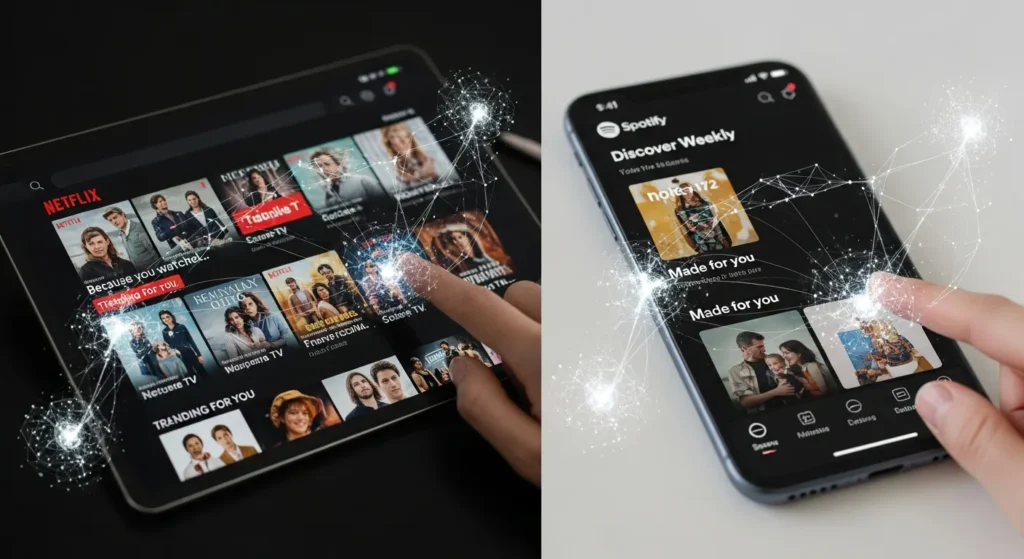
You’re scrolling through Netflix, and it suggests a documentary that hits all your nerdy interests. Or Spotify drops a playlist that’s so you it feels like it read your diary. That’s real-world AI at work, courtesy of recommendation systems prime AI examples that make your digital life feel personal.
How Do They Nail It?
These systems are like detectives, piecing together clues from your behavior. They use collaborative filtering (matching you with people who like similar stuff) and content-based filtering (pairing content with your past choices). When I got hooked on true crime podcasts, Spotify started suggesting gritty mystery shows on Netflix. It’s like the apps were having a secret meeting about my tastes. Machine learning crunches your clicks, watches, and skips to predict what’ll grab you next.
Where You’re Seeing It
- Streaming: Netflix and YouTube pick shows or videos you’ll love.
- Music: Spotify’s Discover Weekly or Apple Music’s curated playlists.
- Shopping: Amazon suggests gear based on what you’ve browsed.
- Social Media: Instagram shows you posts or accounts that match your vibe.
Why It’s a Big Deal
Recommendation systems save you from drowning in choices. With endless content out there, AI picks what’s worth your time, making your evenings more fun. I discovered a folk band I now adore because Spotify thought I’d dig their sound AI was right. The downside? It can box you into a bubble, showing only what you already like. Try stepping outside the algorithm now and then for a fresh perspective.
3. Navigation Apps: Your Personal Road Guru
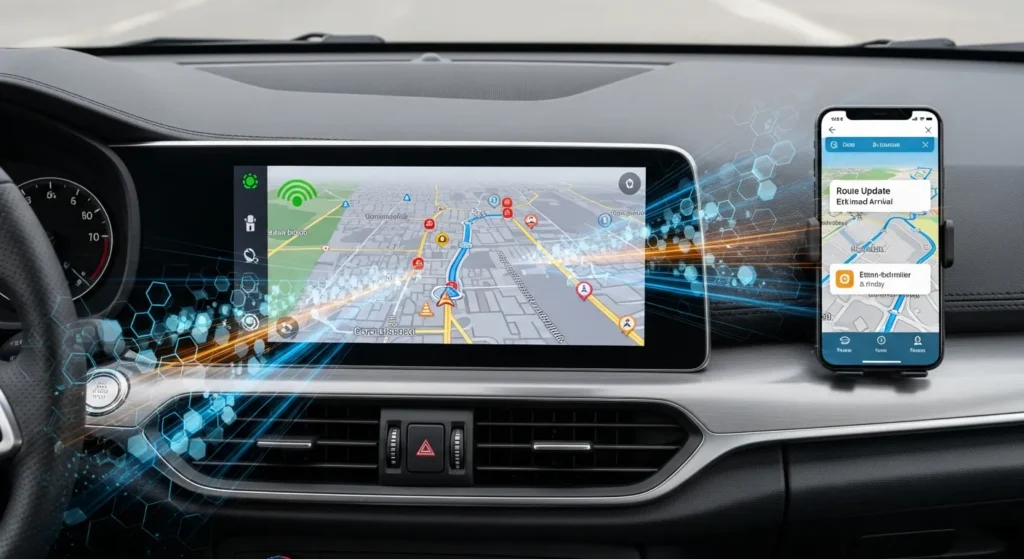
Ever been saved from a traffic nightmare by Google Maps? Or found a hidden shortcut thanks to Waze? Navigation apps are AI use cases that turn chaotic commutes into smooth rides, proving real-world AI is your best co-pilot.
What’s Under the Hood?
Such applications gather information from the GPS, traffic cameras, and even the phones of other drivers in order to depict the best route. Machine learning identifies the trends, such as traffic jams during rush hour or road construction, and makes a forecast of the quickest way. I was on my way to a friend’s wedding last summer, and there was a detour on my route.
Instead of taking me through the city, Google Maps directed me to a less traveled country road where I saved 30 minutes and had the opportunity to make some beautiful views. This is AI that is part of my everyday life but makes me appear as if I have everything under control.
How You’re Using It
- Driving: Get the quickest route to work or a new spot.
- Public Transit: Catch real-time bus or train updates.
- Walking or Biking: Find safe paths for a stroll or ride.
- Local Gems: Discover nearby diners or gas stations.
Why It’s Awesome
Navigation apps simplify life. They save time, reduce pressure and are even good for the environment by providing you with the most fuel, efficient routes. When you are disoriented or running late, these apps will come to your rescue. However, they are not perfect, a weak signal or outdated data can cause you to take a wrong turn, and the fact that your location is being tracked can be a bit of a bother. Nevertheless, these handy AI implementations are amazing for any road trip.
4. Smart Home Gear: Your House Has a Brain

Your lights dim as you settle in for movie night. Your thermostat knows you’re home and cranks the AC. Smart home devices like Nest, Philips Hue, and Ring are AI examples that make your space feel alive and attentive.
How Your Home Got So Clever
These gizmos employ AI and IoT to comprehend your habits. Nest thermostat understood that you prefer a cold room at night and now it gets cooled even before your thought arrives. Intelligent doorbells as Ring exploit image recognition to identify known faces or to alarm in case of unusual movement. Recently, while I was working, a video of my neighbor leaving me some cookies was sent to my doorbell so that I could see the clip, technology that makes it possible for me to stay in touch and nourish myself.
Where You’re Seeing It
- Thermostats: Nest saves energy by learning your schedule.
- Lights: Philips Hue sets the mood with a voice command.
- Security: Ring cameras keep an eye on your doorstep.
- Appliances: Smart fridges track your groceries or suggest meals.
Why It’s a Win
Smart homes allow the users to enjoy more comfort, safety, and eco-friendliness. They can be compared to living in a house that predicts what you will need. However, device compatibility is often a nightmare when you want to use multiple brands and security threats are not a myth, cybercriminals are eager to exploit IoT gadgets. Secure your network thoroughly so you can take advantage of this AI scenario safely.
5. Social Media: The Scroll That Reads Your Mind
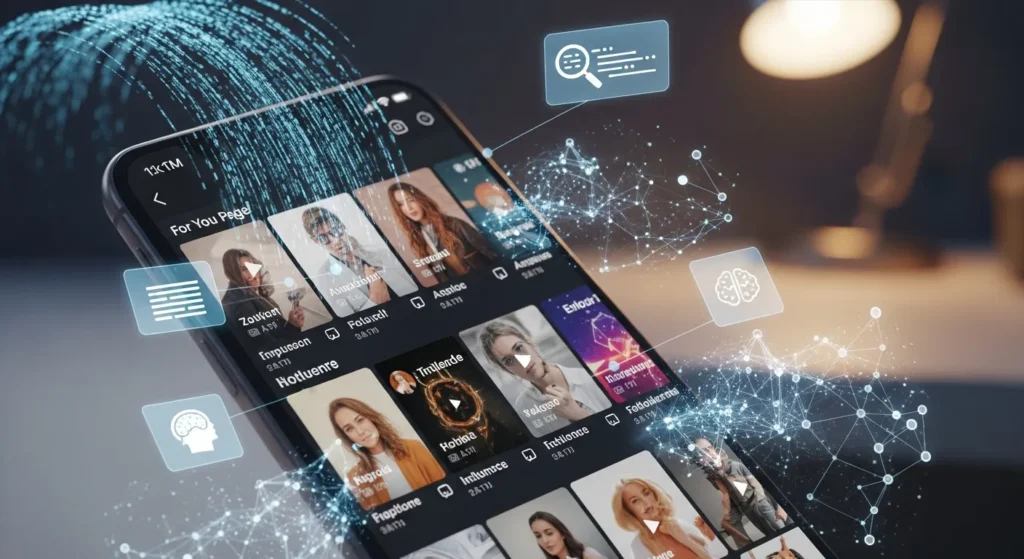
TikTok serves up videos that keep you glued to your phone. Instagram ads know you’re eyeing that new backpack. Social media’s addictive pull is powered by real-world AI, a standout AI example that shapes your online world.
What’s Feeding Your Feed?
AI tracks your likes, shares, and watch time to curate content. Computer vision scans images for themes like puppies or travel while natural language processing reads captions. When I got obsessed with baking videos, TikTok flooded my feed with sourdough tips. It’s like I knew I was kneading a new hobby.
How You’re Using It
- Feeds: TikTok’s For You page or Instagram’s Explore tab.
- Ads: Targeted promos that match your interests.
- Moderation: AI flags toxic comments or posts.
- Trends: Spot viral challenges to keep you in the loop.
Why It’s Addictive
AI makes social media feel like it’s made just for you, boosting engagement. It’s also a win for brands with ads that hit the mark. But it can trap you in echo chambers or amplify bad info, so scroll with a critical eye. This practical AI application is a digital double-edged sword.
6. Facial Recognition: Your Face Is the Key
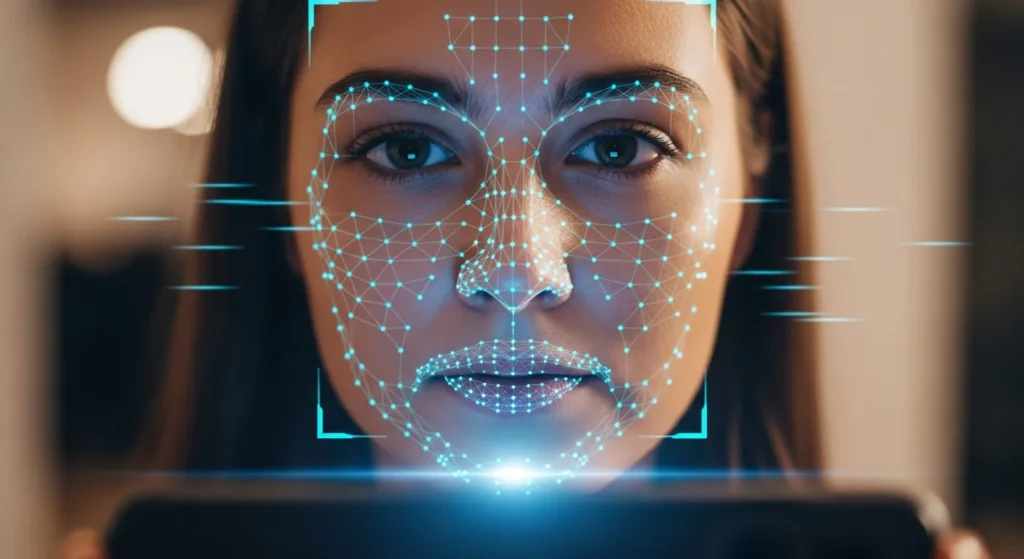
Unlocking your phone with a glance or zipping through airport security facial recognition is an AI example that’s both cool and a little wild. This practical AI application is all about speed and security.
How It Knows It’s You
Deep learning maps your face’s unique features, think nose shape or eye distance into a digital code. It checks this against stored data to verify you, even with a new beard. My phone unlocks so fast I forget it’s scanning me. That’s AI in daily life, making things effortless.
Where You’re Seeing It
- Phones: iPhone Face ID or Android face unlock.
- Travel: Airports use it for quick check-ins.
- Retail: Some stores spot VIPs for special deals.
- Security: Cameras in homes or public spaces.
Why It’s Handy
It’s fast, secure, and beats remembering passwords. But privacy is a big deal—facial data could be misused if it falls into the wrong hands. Transparency and consent are musts for this AI use case.
7. Email Filters: Your Inbox’s Bouncer
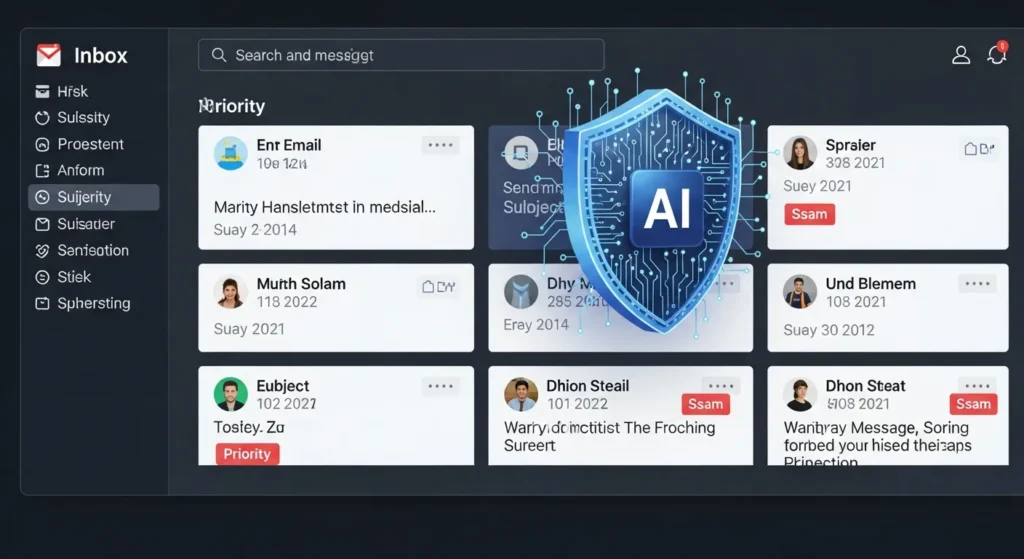
If your inbox isn’t a spam disaster, you’ve got real-world AI to thank. Email apps like Gmail use AI to sort messages, block junk, and spotlight what matters, making this a key AI example for staying organized.
How It Keeps Things Tidy
AI scans emails for sketchy links or spammy vibes using natural language processing. It learns from your habits like when you trash those “win a cruise” emails to fine-tune its filters. Gmail once flagged a work email as urgent right when I needed it, like it knew my boss was waiting. That’s AI in daily life saving the day.
How You’re Using It
- Spam Blocking: Junk emails vanish before you see them.
- Priority Sorting: Important messages rise to the top.
- Phishing Defense: AI spots scams to keep you safe.
- Smart Replies: Quick response suggestions for hectic days.
Why It’s a Lifesaver
A clean inbox means less stress and more focus. It also protects you from phishing scams. But AI can be overzealous, so check your spam folder for lost gems. This practical AI application keeps your email game strong.
8. Online Shopping: A Store That Gets You
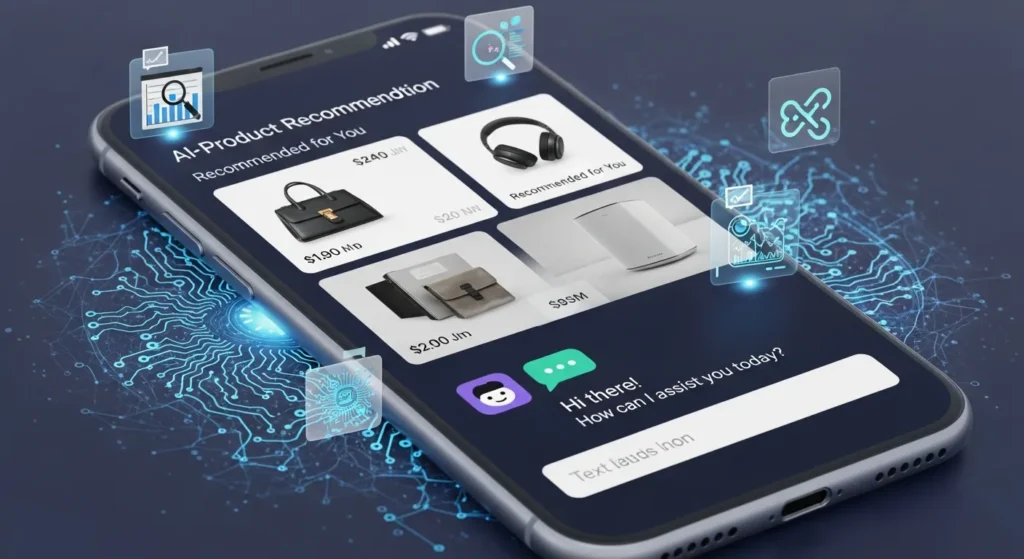
Ever notice how Amazon suggests the perfect gift for your friend? Or how Etsy knows you’re into vintage vibes? Online shopping is a playground for AI examples, turning clicks into a personal retail adventure.
How AI Shops for You
AI tracks your browsing, purchases, and cart hesitations to suggest items. Dynamic pricing tweaks costs based on demand, and chatbots answer your questions in a snap. I once left a jacket in my cart, and Amazon sent me a coupon the next day AI knew how to seal the deal.
Where You’re Seeing It
- Recommendations: Amazon’s “You might like” picks.
- Pricing: Deals shift to stay competitive.
- Support: AI chatbots handle returns or queries.
- Search: Smarter results for vague searches like “cool scarf.”
Why It’s Great
AI makes shopping quick, personal, and budget-friendly. But data tracking can feel intrusive, and pricing shifts raise fairness questions. This AI use case is a retail revolution, but shop smart.
9. Healthcare Apps: Your Wellness Wingman
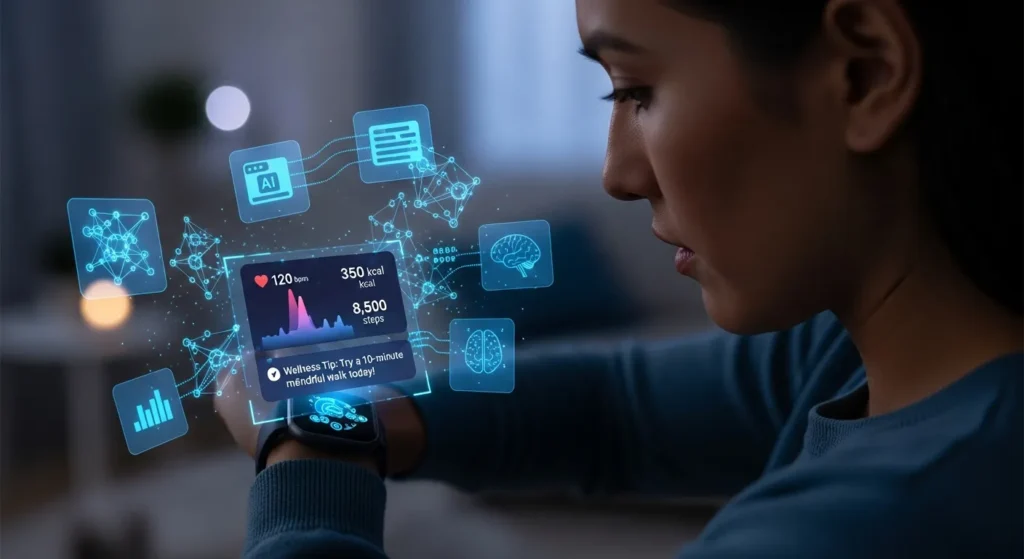
Your smartwatch nudges you to stand up after a long meeting. Or an app suggests a smoothie recipe to hit your nutrition goals. Healthcare apps like Fitbit or MyFitnessPal are AI examples that keep you healthy, proving practical AI applications belong in your pocket.
How AI Keeps You Well
AI crunches data from wearables or your food logs to give tailored advice. Machine learning spots patterns like a dip in your sleep quality and suggests fixes. My fitness tracker once warned me about a weird heart rate, nudging me to call my doctor. That’s AI in daily life looking out for you.
Where You’re Seeing It
- Fitness: Fitbit tracks steps and sets goals.
- Nutrition: MyFitnessPal plans your meals.
- Telemedicine: Apps connect you with doctors virtually.
- Mental Health: Headspace offers custom meditation.
Why It’s Empowering
These apps put health in your hands with actionable insights. They’re also a game-changer for remote medical access. But accuracy is key bad data could mislead you. Privacy matters too, so pick apps with solid security. This AI use case is your wellness cheerleader.
10. Autonomous Vehicles: Cars That Think for You
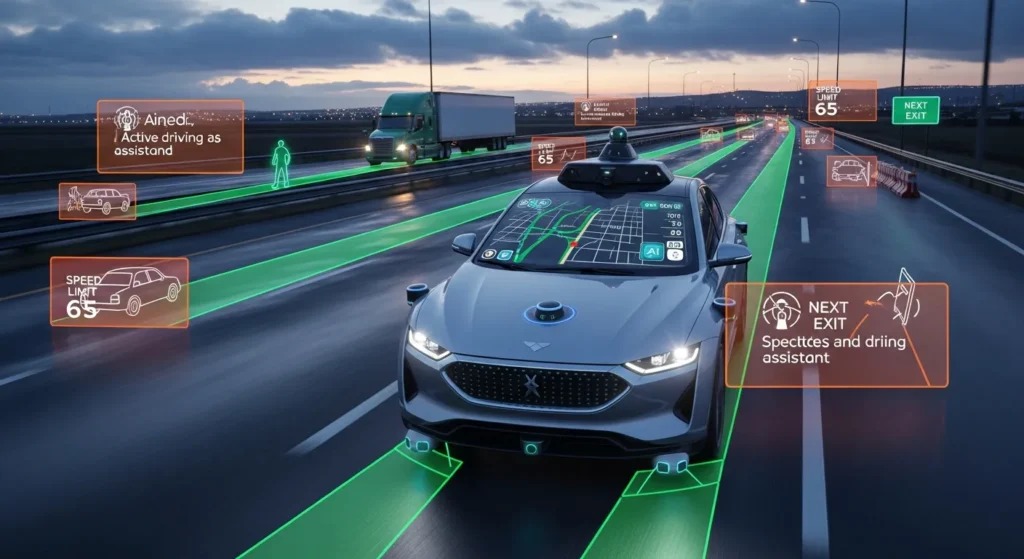
Your car beeps when you’re about to back into a pole. Or it keeps you in your lane on a long drive. Autonomous vehicles and driver aids, like Tesla’s Autopilot, are bold AI examples reshaping how we roll.
How Cars Get So Smart
AI processes data from cameras, radar, and sensors to navigate roads. Deep learning helps cars “see” stop signs or pedestrians, even in fog. I test-drove a car with lane-keeping assist, and it gently nudged me back when I drifted AI in daily life keeping me safe.
Where You’re Seeing It
- Driver Aids: Adaptive cruise control or parking assist.
- Self-Driving: Waymo’s driverless cabs in some cities.
- Safety: Auto-braking to avoid crashes.
- Fleets: AI-powered delivery or ride-sharing.
Why It’s Exciting
AI makes driving safer and less exhausting, with self-driving cars promising to free up your commute time. But regulations, safety concerns, and ethical questions (like who’s at fault in a crash) are big hurdles. This practical AI application is steering us toward a wild future.
What’s Next for AI? A Glimpse Ahead
These AI examples are just the start. Real-world AI is gearing up to transform education (personalized tutoring apps), finance (smarter budgeting tools), and even your kitchen (AI recipes based on what’s in your fridge). Picture cities where traffic lights sync to cut congestion or homes that order groceries before you run out. The future of AI in daily life is bright, but we’ve got to tackle privacy, bias, and access to keep it fair for everyone.
Conclusion
AI is your behind-the-scenes MVP, making your day smoother, smarter, and more fun. From virtual assistants cracking jokes to cars watching the road, these 10 real-world examples of AI show how practical AI applications are part of your routine. They save time, spark joy, and keep you safe, all while blending into the background. As AI keeps growing, staying curious about these AI use cases will help you navigate a world that’s more connected than ever. Next time your phone nails a suggestion or your thermostat gets it just right, give a little nod to the AI making it happen.