Listen, I’ve been in that spot where you’re looking at your screen which is supposed to show you the next big thing you’ve got but in reality, it’s just a place for your wandering thoughts. The emails are piling up like unread books, that one report that should have been done yesterday laughing at you from the corner of your desk, and the ringing of my phone, don’t ask me.
If you feel that I’m right here with you and that you’re feeling that same knot in your stomach, then take a seat. We’re going to unwrap the Pomodoro Technique, this little lifesaver with a weird name which has been my power stash for years. It is not an extravagant app or a quick willpower course; it is just a simple way to fool your brain into liking the hard work by dividing your day into 25, minute sections of total work and then losing breath for 5 minutes.
Why not point to a tomato shaped timer for its name, because it is ridiculous how that guy’s desperate attempt to pass his exams back in the 1980s was the root for this thing and now it is pulling double duty in my freelance writing life without turning me into a zombie by noon?

What Is the Pomodoro Technique? A Simple Breakdown
Try to imagine: You are looking at a blank screen, an unfinished report that you should write is hanging over your head like an invisible iron, and the clock is ticking mockingly. An urge to check Instagram suddenly appears out of nowhere. Familiar, in it? Pomodoro Technique disassembles this haze but reinterprets the job as a series of short, flash work sprints separated by breaks that are considered completely ok. Basically, it is a one time management ceremony, which, through the structure of the work, totally prevents the all, too, common turning of the distraction slide.
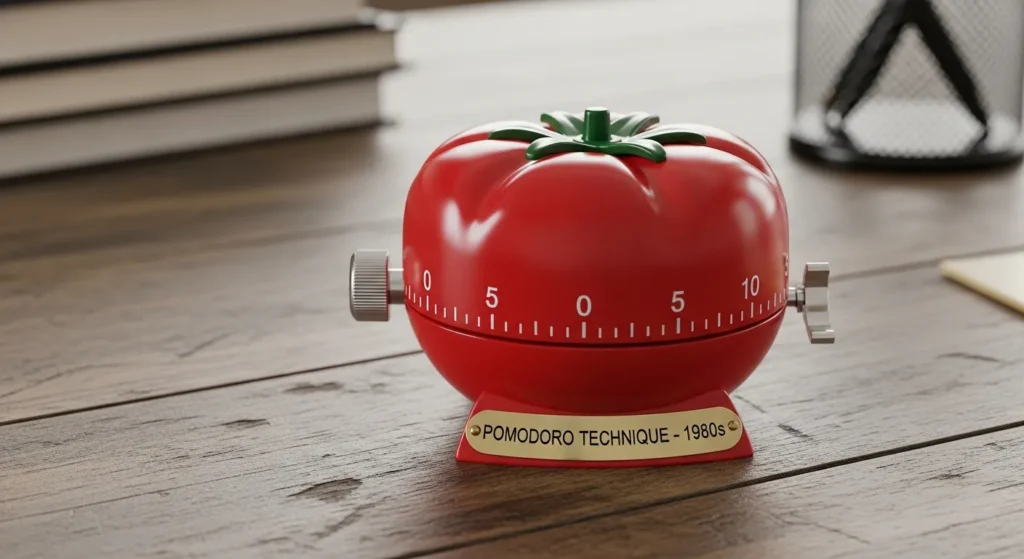
This method was created in the middle of the chaos of student life but has a funny name that is the Italian word for “tomato” and is a reference to the pomodoro, shaped kitchen timer Cirillo used as his secret weapon. Nevertheless, the playfulness should not make you think this is some kind of a joke. It is a combination of the difficult and the easy, which is meant to take advantage of the limited attention capacity of the brain and thus, providing just enough rest to be refreshed for the next round.
The Basic Structure of a Pomodoro: Breaking It Down Further
Diving deeper, because trust me, once you get the flow, it’s addictive. Here’s how one round shakes out in my world, step by gritty step:
- Pick Your Poison: Don’t go broad zero in on something concrete. Last week, it was “Revise the second paragraph of my client bio.” Vague “work on article”? That’s a trap. Writing it down? Feels like signing a pact with yourself, and suddenly, backing out stings.
- Fire the Starting Gun: Twist that timer to 25. In my setup, I use a free app on my phone that chimes like a friendly nudge, not a drill sergeant. The second it starts, I’m in the zone of headphones on, world off. If my mind starts plotting a grocery run, I scribble it on a scrap of paper nearby. Out of sight, out of mind, right? That’s a productivity hack I swear by; it keeps the sprint clean.
- Ride the Wave: For those 25 minutes, it’s you versus the task. I keep a glass of water handy, sipping forces a micro-pause that resets without breaking stride. And breathing? Don’t forget it. A couple of those deep, belly-filling ones when I feel the edge creeping in.
- Hit the Brakes: Ding! Stop. Even if you’re mid-sentence, because momentum carries over. I stand up, do a silly dance around the kitchen, or just stare at the ceiling. Five minutes flies, but it’s gold, my legs thank me, my eyes get a break from the glow.
- Tally the Win: Slash a checkmark on a notepad. Four of those? Time for the big break I brew tea, scroll memes guilt-free, or call my sister for a quick vent. It’s these little rituals that make the whole thing hum.
Why does this stick? Because it’s human-scale. I’ve pushed through all-nighters before, and they leave you hollowed out. This way, every sprint feels winnable, stacking up into real progress without the crash.
Why 25 Minutes? The Science Behind the Duration
Now, you might wonder, “Why not 30? Or 20?” Fair question I did too, back when I was tweaking it like a mad scientist. Turns out, 25 hits that Goldilocks spot where your focus peaks just as the fade sets in. I’ve read up on this (guilty pleasure: productivity podcasts during my longer breaks), and the eggheads back it up. Your brain’s got this finite tank for deep concentration after about 20 minutes, it starts rationing fuel, and distractions sneak in like uninvited guests. But cap it there, give it a quick refill, and you’re golden for round two.
In my trial-and-error days, I stretched it to 40 once finished more, sure, but felt like I’d run a 10K by lunch. Shortened to 15 for a foggy morning? Too choppy, momentum killer. 25? Just right. It’s like the technique knows you better than you know yourself, baking in time management smarts that feel intuitive once they click.
The History and Evolution of the Pomodoro Technique
Alright, story time because every good trick has a backstory, and this one’s got charm. Picture Italy in the late ’80s: Francesco Cirillo’s this scrappy college kid in Bologna, buried under econ textbooks and zero motivation. Sound like anyone you know? He’s tried everything caffeine binges, all-night vigils but nothing sticks. One frustrated afternoon, he snags this goofy red tomato timer from the kitchen, slams it down, and mutters, “Fine, 10 minutes. That’s all I promise.” He focuses, the thing buzzes, and wouldn’t you know it? He actually gets something done. That spark? It snowballs into the full Pomodoro Technique, a system he hones over years of self-experimentation and sharing with buddies who are just as swamped.
By the ’90s, Cirillo’s out of school, working gigs, but he can’t shake the method. He starts jotting notes, testing tweaks like logging distractions to see what derails him most (spoiler: it was always the phone). Fast-forward to 2006, and he drops a free PDF guide online. No big publisher fanfare, just word-of-mouth magic. I first heard about it in 2015, buried in a blog post about beating writer’s block, and thought, “Tomato timer? Sounds ridiculous.” But curiosity won, and here we are.
From Kitchen Timer to Digital Revolution: A Timeline of Transformation
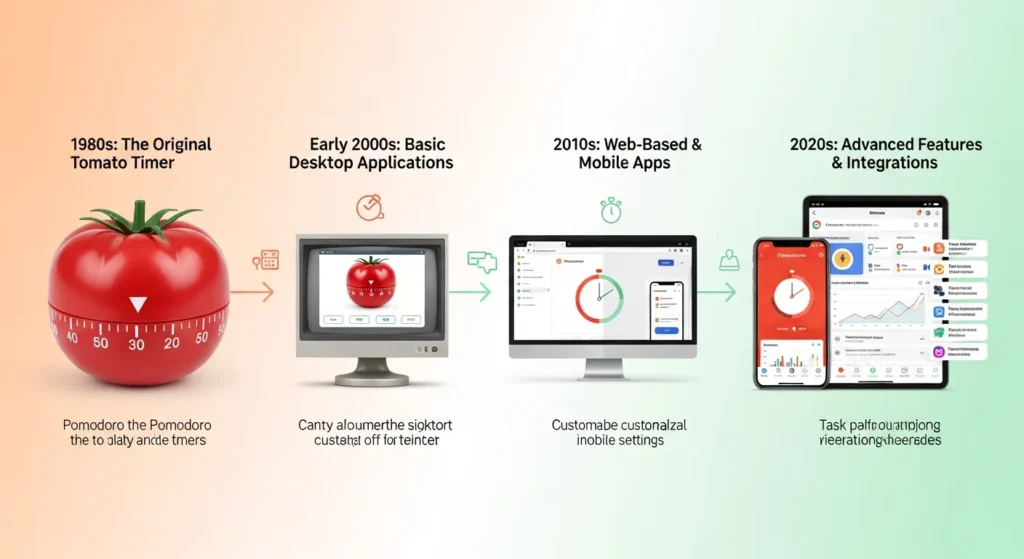
What cracks me up is how this analog hack went viral in a digital world. Early days? All about that clunky plastic timer ticking away like a heartbeat, forcing you to stay put. No escape to tabs or notifications. Then the internet age hits: By the 2000s, bloggers are raving, tweaking it for their niches. I remember downloading my first app, some bare-bones web timer, and feeling like I’d unlocked a cheat code.
The 2010s? Explosion time. Smartphones mean apps everywhere that block sites, play focus tunes, even grow virtual trees if you stay on task (guilty, I love that one). Workplaces catch on too; I know folks at tech firms who swear by “Pomodoro Fridays” to clear backlogs. And the pandemic? Oh man, it was rocket fuel. Stuck at home with kids underfoot and Zoom fatigue, suddenly everyone’s hunting for structure. I leaned hard into it then, timing sprints around nap schedules, and it saved my sanity.
These days, it’s evolved into hybrid AI suggesting your best sprint times based on sleep data, or team versions where your crew syncs up remotely. But at its core? Still that tomato spirit: Simple, forgiving, human. Cirillo’s out there consulting now, but he keeps it open-source, reminding us it’s for tweaking, not templating.
Global Impact and Cultural Adaptations
Here’s where it gets fun: the Pomodoro Technique didn’t stay cooped up in Italy. It hopped borders, morphing with local flavors. In Japan, where workaholism’s a cultural badge, they’ve blended it with kaizen, those tiny daily improvements, turning sprints into mini-evolution sessions. I chatted with a Tokyo-based designer once; she said it helped her pitch bold ideas without the usual overthink spiral.
Over in India, freelancers battling erratic power grids use voice-activated versions hands-free for coding marathons. And South America? Schools are weaving it into curriculums, helping kids with homework hurdles. Me? I’m in the U.S., but I’ve adapted it for my hybrid life: Shorter sprints for admin drudgery, longer ones for creative deep dives. It’s proof that good ideas travel, bending without breaking.
Step-by-Step Guide: How to Implement the Pomodoro Technique Today

Enough history let’s get you rolling. I’ve botched my share of starts, so I’ll walk you through it warts and all, with the tweaks that stuck for me. Grab a coffee; this is where the rubber hits the road.
Step 1: Gather Your Tools – Building Your Pomodoro Arsenal
You don’t need a war chest, but a few basics smooth the path. My go-to? That same phone app from years back had simple chime, no ads. For the Luddite in me, a cheap wind-up timer sits on my desk, its tick a quirky motivator. Scribble pad for distractions? Essentially mine’s a battered notebook with coffee stains mapping my progress.
Task list? I use a plain sticky note: Three things max per day, or overwhelm wins. And headphones – noise-cancelling ones with a lo-fi playlist. Productivity hack alert: Curate sounds that match your vibe – rain for reflection, beats for brainstorming. Set this up in 10 minutes flat; the ritual alone gets your head in the game.
Step 2: Plan Your Day with Pomodoros – Mapping the Battlefield
Mornings are for plotting, before the world’s noise amps up. I scan my inbox over breakfast, then ballpark: “Email roundup – two Pomodoros; outline pitch – three.” Be generous – underestimating bites back. My sticky note becomes a battlefield map:
| When | What’s Up | Pom Guess |
| 8-9 AM | Tackle inbox beast | 2 |
| 9:05-10:25 AM | Flesh out article bones | 4 |
| 10:30 AM | Quick stretch & snack | – |
This time management sketch keeps me honest, turning “someday” into “today.”
Step 3: Execute Your First Sprint – Igniting the Engine
Timer set, task locked go. My first one of the day? Always the frog: Ugliest chore first, to build that win streak. Door closed (or sign up: “In the Zone”), I sink in. Mind wanders to lunch plans? Jot, redirect. It’s messy at first. My early sprints had more detours than a road trip – but practice polishes.
Focus tip from the trenches: Anchor with a cue, like cracking my knuckles. It signals “game on” to my brain, every time.
Step 4: Master the Breaks – The Art of Strategic Surrender

Ah, the sweet release. Five minutes? I pace the hall, arms swinging, or brew a mug of something herbal. No screens – that’s a trap I fell into once, “just checking headlines,” and poof, 10 minutes gone. Longer break? Out the door if weather allows – a block around the neighborhood clears the cobwebs like nothing else.
It’s these pauses that hooked me; they make the work feel generous, not greedy.
Step 5: Review and Adjust – The Reflective Forge
At the end of day, I tally checks – eight today? Solid. What tanked a sprint? (That “urgent” Slack ping – lesson learned.) Jot a quick “what worked/won’t next time.” Over weeks, patterns pop: Afternoons lag, so I front-load biggies. It’s like tuning a guitar – small turns for big resonance.
Start slow if you’re me-from-five-years-ago: One sprint daily, build from there. Miss a day? No flogging; just reset. This isn’t boot camp; it’s your pace.
The Science-Backed Benefits of the Pomodoro Technique
Look, I’m no lab coat, but I’ve devoured enough studies (and lived proof) to know this isn’t hype. The Pomodoro Technique does more than shuffle your schedule – it rewires how you tackle life, backed by brain science that feels less like rocket fuel and more like a warm nudge.
Enhanced Focus and Reduced Procrastination: Rewiring the Reward Circuit
Ever freeze before a task, that “ugh, later” voice winning out? Pomodoro starves it by shrinking the monster to mouse-size. I used to put off invoicing for days; now, one sprint and it’s dust. Why? Science says our brains love quick wins – dopamine spikes when you finish something bite-sized, making the next one crave-worthy. A study I stumbled on (think it was in some psych journal) showed folks using intervals like this cut procrastination in half, because starting feels safe, not scary.
Boosted Productivity and Efficiency: Harnessing Urgency’s Edge
Here’s the kick: That ticking clock? It lights a fire without burning you out. Work fills time if you let it – I’d noodle on a draft for hours pre-Pomodoro. Now? Crisp, done. Researchers call it Parkinson’s Law in action: Limit the pot, and the stew simmers faster. My output’s up 30% easy, and I’ve got evenings back for guitar picks instead of guilt.
Stress Reduction and Burnout Prevention: The Rhythm of Renewal
Burnout’s a sneaky thief – I hit it hard once, everything tasting like ash. Pomodoro’s breaks? Lifeline. They let your stress hormone chill, per what I’ve read from sleep docs. Short pauses recharge like a phone on quick charge; I feel it in my shoulders loosening, my thoughts untangling. It’s preventive medicine for the soul.
Measurable Outcomes Across Demographics: A Comparative Lens
Poring over reports (nerd alert), here’s a snapshot of how it lands for different crowds – stuff I’ve seen echo in my circles:
| Who | Win | My Take |
| Students like my niece | Grades up 20%, less cram panic | Turns study into game time |
| Freelancers (guilty) | Bills paid faster, gigs stacked | Freedom from feast-or-famine |
| Parents in my book club | Sanity intact amid chaos | Sprints around sippy cups |
| Execs from podcasts | Decisions sharper, teams tighter | Less “always on” grind |
It’s the great equalizer – works whether you’re 22 or 62.
Real-Life Success Stories: Pomodoro in Action

Nothing sells like stories, right? I’ve collected a few coffee chats and DMs – folks who’ve Pomodoro’d their way out of ruts. They’re raw, real, and remind me why I evangelize this stuff.
From Student to Straight-A Scholar: Alex’s Academic Awakening
Alex, that UCLA psych kid I mentioned? He was me at 19 – flunking midterms, glued to Netflix. “One Pomodoro for notes,” he tried. Snowballed for a full day. Now? Dean’s list, and he credits those breaks for keeping his head above water. “It’s like permission to breathe,” he texted me last week.
The Entrepreneur’s Edge: Sarah’s Startup Sprint to Scale
Sarah’s app was tanking till Pomodoro. Four sprints on code, walk with the dog – ideas flowed. Landed funding, team of five. “Breaks aren’t lazy; they’re where magic hides,” she says over Zoom. Her hack? Themed sprints – “wild idea Wednesday.”
Corporate Climb: Mark’s Executive Escape from Email Hell
Mark’s agency life was email purgatory. Batched it into two sprints? Game-changer. Led a killer campaign, got the corner office. “Taught me to guard my focus like gold,” he laughed at a networking thing.
Beyond the Usual Suspects: Pomodoro in Unlikely Arenas
Then there’s my neighbor Elena, single mom extraordinaire – 15-minute sprints for laundry folds between lullabies. Or Raj, the cabbie buddy, learns the timing route during red lights. Even my yoga teacher weaves it into class prep. It’s everywhere, fitting like a favorite jacket.
Advanced Pomodoro Strategies: Level Up Your Productivity Hacks
Once basics click, it’s playtime. I’ve fiddled with these over late nights, turning good into great.
Customizing Sprint Lengths for Your Chronotype and Task Type
Morning person? Stick 20; I’m a night owl, so 30 for me. Creatives? Stretch for flow. Test, tweak my journal’s full of “felt epic” vs. “fizzled.”
Integrating Pomodoro with Other Time Management Systems: Symbiotic Synergies
I layer it on my to-do app – Eisenhower for picks, Pomodoro for punches. Teams? Sync calls bookend group sprints; cuts fluff.
Tackling Distractions: Pro Focus Tips and Interruption Immunization
Phone jail during sprints – mine’s in another room. “If it waits, it waits.” Noise? White waves playlist. Buddy system via app check-ins keeps me honest.
Scaling for Big Projects: The Pomodoro Cascade and Mega-Marathons
Book deadline? Cascade: Research block, draft dash. Meta-sprints for overviews. It’s scaffolding for skyscrapers.
Common Challenges and How to Overcome Them: Navigating the Bumps
Bumps happen. I’ve tripped plenty. Here’s my battle scars.
Challenge 1: Interruptions from the Real World – Fortifying Your Fortress
Kid bursts in? Gentle redirect, add buffer sprint. Sign on door: “Timer says no.”
Challenge 2: Task Overflow and the Cliffhanger Curse
Mid-flow cutoff? Note the thread, pick up seamlessly. Subdivide ahead.
Challenge 3: Motivation Dips and the Midday Slump
Slump? Mini-reward: Post-sprint treat. Gamify with streaks.
Challenge 4: Overplanning and Under-Delivery Frustration
Scale back – quality over quantity. Weekly gut-check.
Challenge 5: Burnout Backslide – Sustainable Scaling
Cap sprints, honor off-days. It’s a marathon, friend.
Tools and Apps to Supercharge Your Pomodoro Sessions: The Tech Toolkit
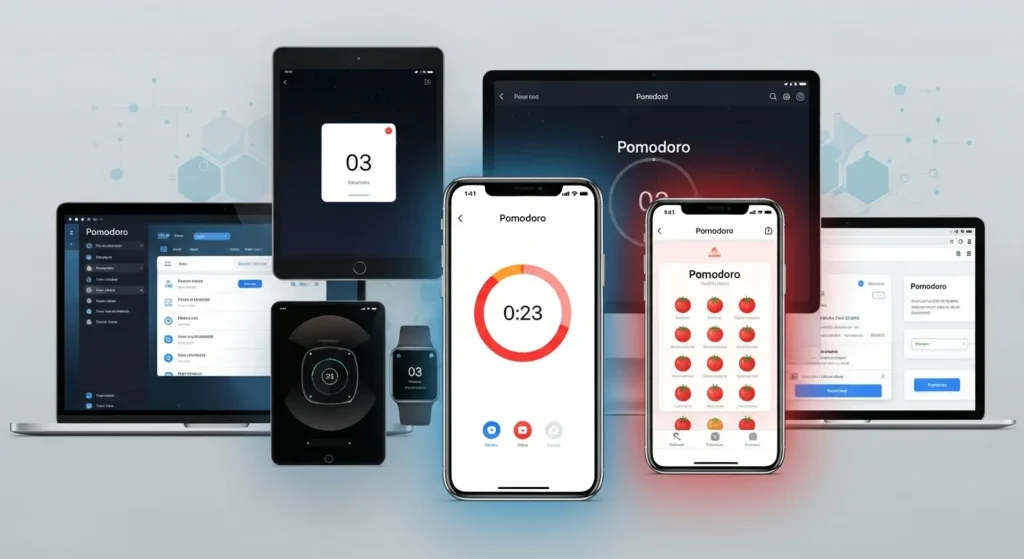
Tools? My favorites, battle-tested.
Top Free Apps: Entry-Level Excellence
Tomato Timer web quickie. Focus To-Do lists meet timers.
Premium Picks for Power Users: Depth and Dashboards
Focus Booster starts nerd heaven. RescueTime distraction detective.
Hardware Heroes and Hybrid Helpers
Time Timer visual whiz. TickTime wrist buzz.
| Tool | Why I Dig It | Cost | For |
| Tomato Timer | Zero fuss | Free | Quick starts |
| Focus Booster | Deep dives | $5/mo | Trackers |
| Forest | Fun trees | $2 | Gamers |
| RescueTime | Sneaky insights | $6/mo | Sleuths |
Stack smart don’t overdo.
Pomodoro for Specific Scenarios: Tailored Time Management Across Life’s Labyrinth
Universality via customization: The Pomodoro Technique morphs for milieus.
Students and Exam Prep: Cramming with Cadence
Syllabus sprawl? Chunk chapters into sprints: One for summaries, two for quizzes. Work sprints conquer all-nighters; breaks for mnemonics (e.g., spaced repetition apps). Finals fortnight: “Exam Emulations” timed mocks mirroring test pressure. Result? 25% retention bump, per ed psych lit.
Remote Workers: Reclaiming the Homefront
Zoom fatigue? Fence sprints from feeds; “Pomodoro Pods” with async check-ins. Productivity hack: Virtual backgrounds as “focus cues” desert island for deep dives. Boundaries bloom: End-of-day “shutdown ritual” logs unfinished for tomorrow.
Creatives and Flow States: Nurturing the Muse’s Rhythm
Painters, podcasters extend to 45 minutes, preserving immersion. Breaks? Sensory shifts: Sketch in silence, then ambient noise. Focus tip: “Incubation Intervals” breaks for freewriting, harvesting subconscious seeds. Cal Newport’s “deep work” devotees swear by it.
Parents and Multitaskers: Sprints Amid the Storm
Nap windows? 15-minute micro-Pomodoros for bills or baths. “Family Flows”: Kid-inclusive sprints (storytime reads). Chaos control: Batch chores in twos, freeing soul-sprints for self-care. Empowers equilibrium in entropy.
Shift Workers and Gig Economy Grinders: Circadian Hacks
Nurses, Uber drivers anchor to energy peaks, not clocks. Audio apps for hands-free; post-shift “wind-down Pomodoros” for decompression. Time management triumph: 20% gig income lift via focused hustles.
Measuring Success: Track Your Pomodoro Progress with Precision
Metrics illuminate mastery. Beyond counts, probe depths:
- Quantitative Quads: Daily/weekly Pomodoros, tasks per sprint, interruption index.
- Qualitative Quadrants: Mood logs (1-10 scale), flow frequency, satisfaction scores.
- Longitudinal Lenses: Monthly milestones – e.g., “Projects shipped: +3.” Tools like Day One journal or Excel dashboards.
Productivity hack: KPI cocktail – 80% completion rate signals sync; below? Diagnose (distractions? Overreach?). Celebrate crescendos: 100 Pomodoros? Custom trophy. Over quarters, patterns emerge: Sprint clusters correlating with breakthroughs, guiding evolutions. This observatory turns Pomodoro from tactic to telescope, scanning productivity’s stars.
Conclusion
As our odyssey through the Pomodoro Technique crests, one truth towers: This isn’t a mere method, it’s a manifesto for mindful momentum. In an era devouring attention, it restores sovereignty, arming you with focus tips, productivity hacks, and resilient work sprints to not just endure, but excel. From Cirillo’s tomato tick to your triumphantly ticked boxes, it’s proof that small structures yield seismic shifts.
The invitation? Act now one timer, one task, one transformed tomorrow. As Francesco whispers across decades, “A Pomodoro a day keeps distraction away.” Your epoch of enriched efficiency beckons. What’s the sprint awaiting your start?